How can games cultivate a regenerative mindset?

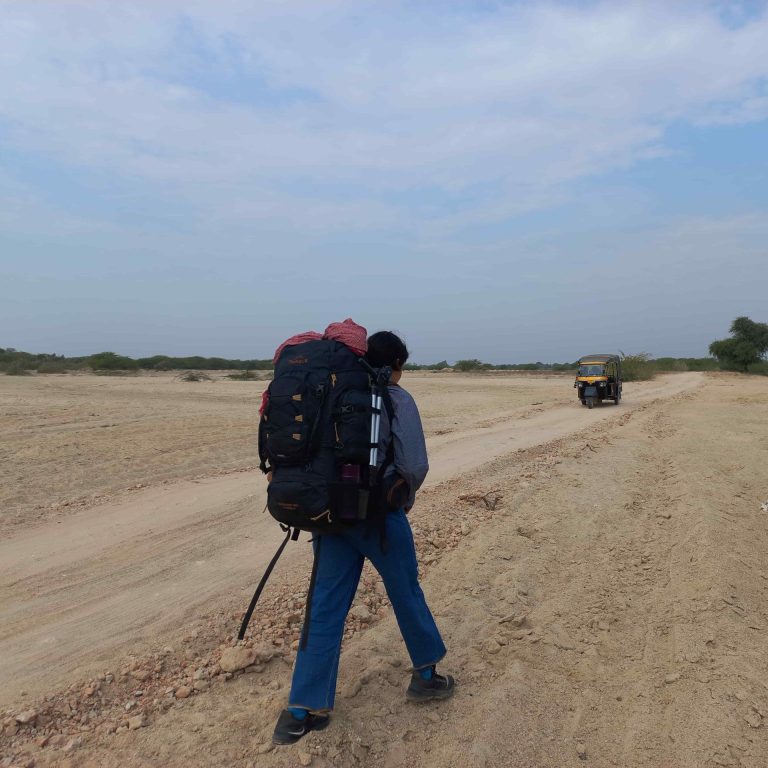
This is the question I’m currently exploring at the Regen Residency through my work. I’m working on Fragments, a tabletop game about becoming the most resilient clan in a dying river basin. This game is based on a 150 km walk along the river Luni in Rajasthan, which I embarked on as part of the Moving Upstream Fellowship by Veditum India Foundation.
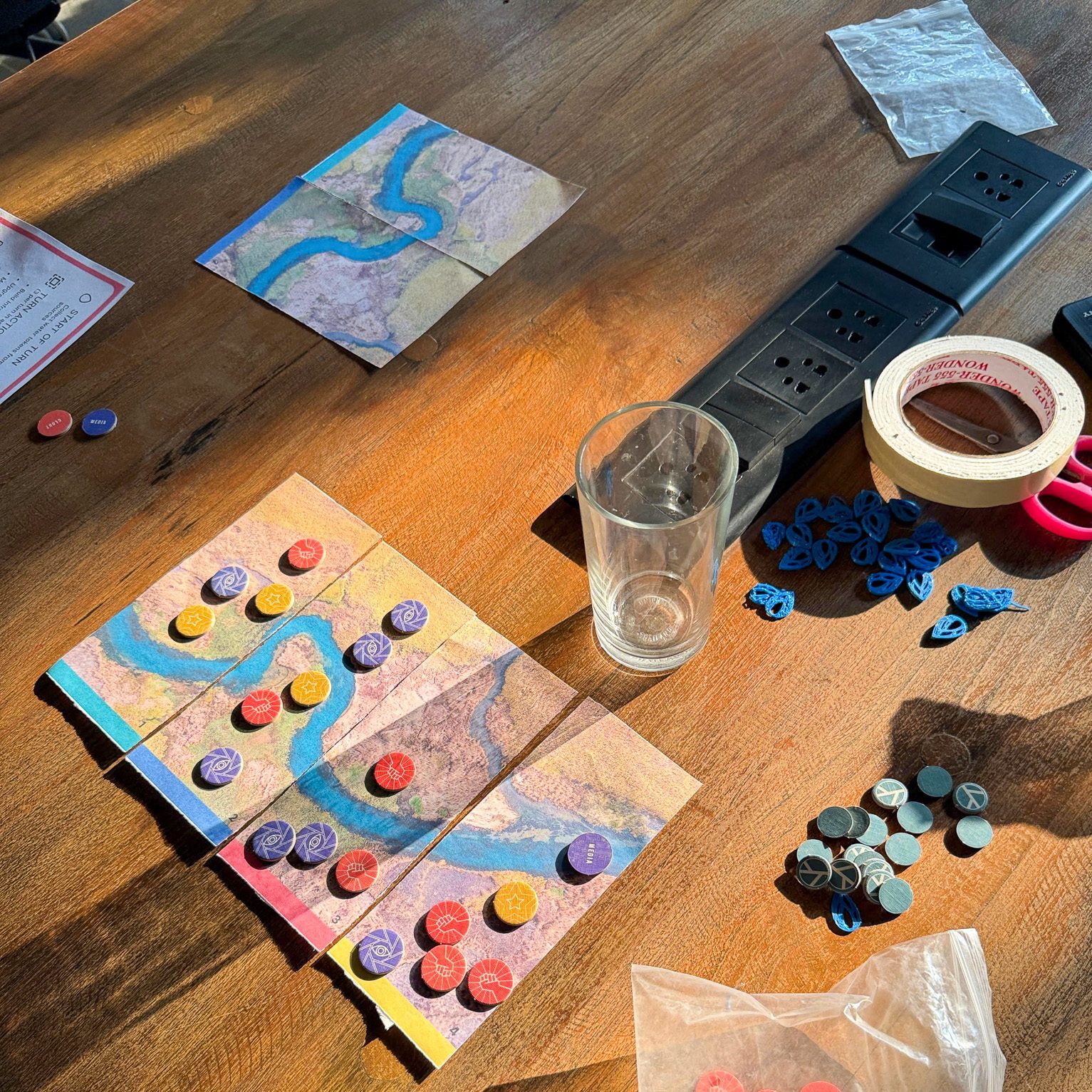
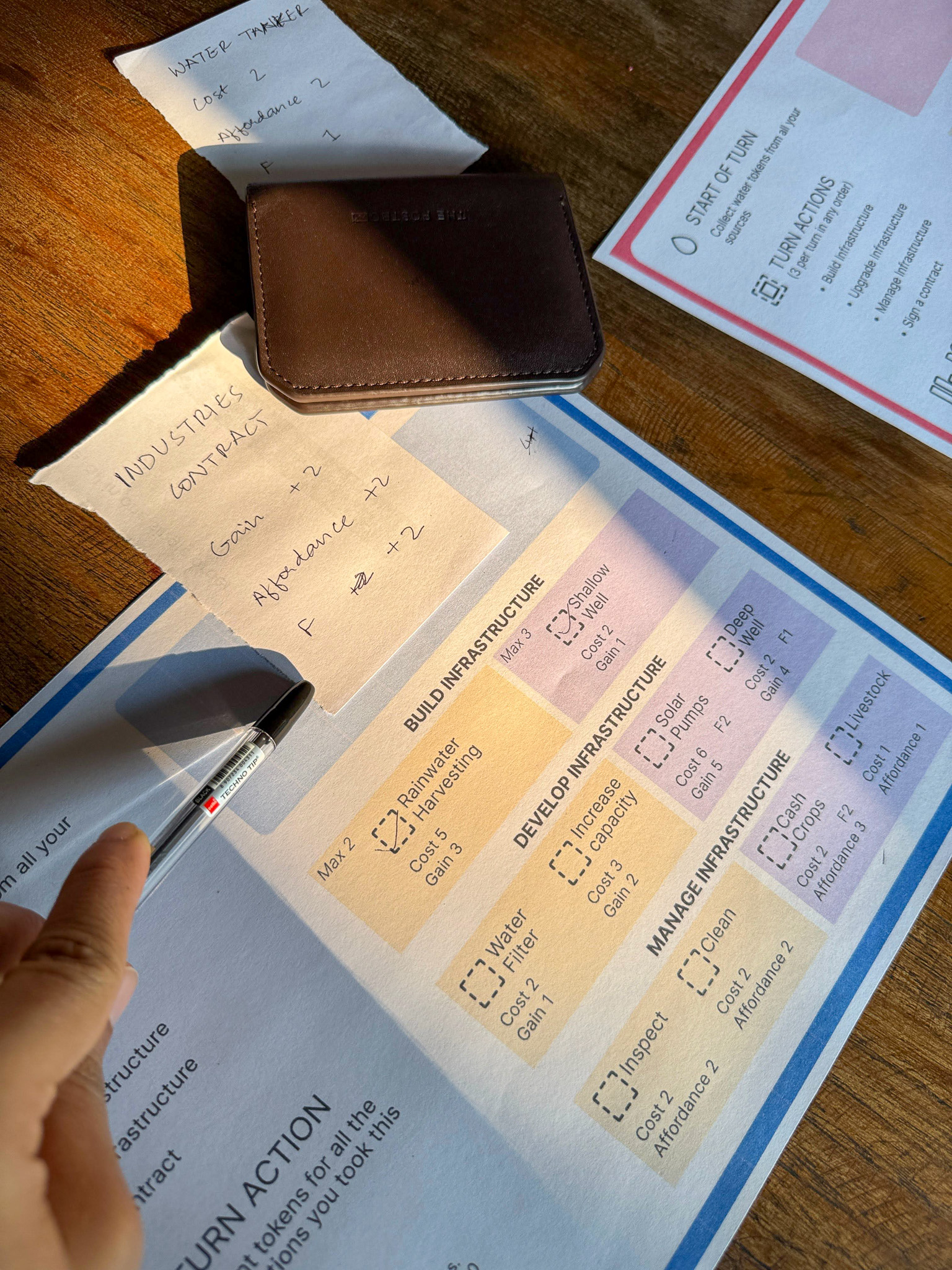


Fragments is an attempt to make visible the slow, invisible forces fragmenting the Luni river, and with it, the livelihoods and communities built around it. When I set out to make a game based on my river walk, I was certain about two things: the game wouldn’t be an awareness piece (that borders on being preachy), nor would it be about ‘fixing’ the river (that propagates a saviour complex). Instead, I want to put players inside the complex negotiations that people living along a dying river navigate daily. Instead of observing from a distance, players must navigate trade-offs shaped by scarcity and structural constraints. In doing so, the game will (hopefully) enable people not just to see these systems, but to experience and reflect on them.
Surfacing hidden systems is an important component of a regenerative mindset. In my opinion, regeneration comes down to the ability to look at the world from a systems perspective. This is the ability to see the connection between food scarcity and climate change, between livelihoods and health of natural ecosystems, between urban heat and public health. Without this lens, it’s hard to see how our daily choices of the products we consume, the way we commute or the way we build our cities affects the world around us.
Making these interconnections not just observable but also felt is how games help reinforce and deepen a mindset of regeneration.
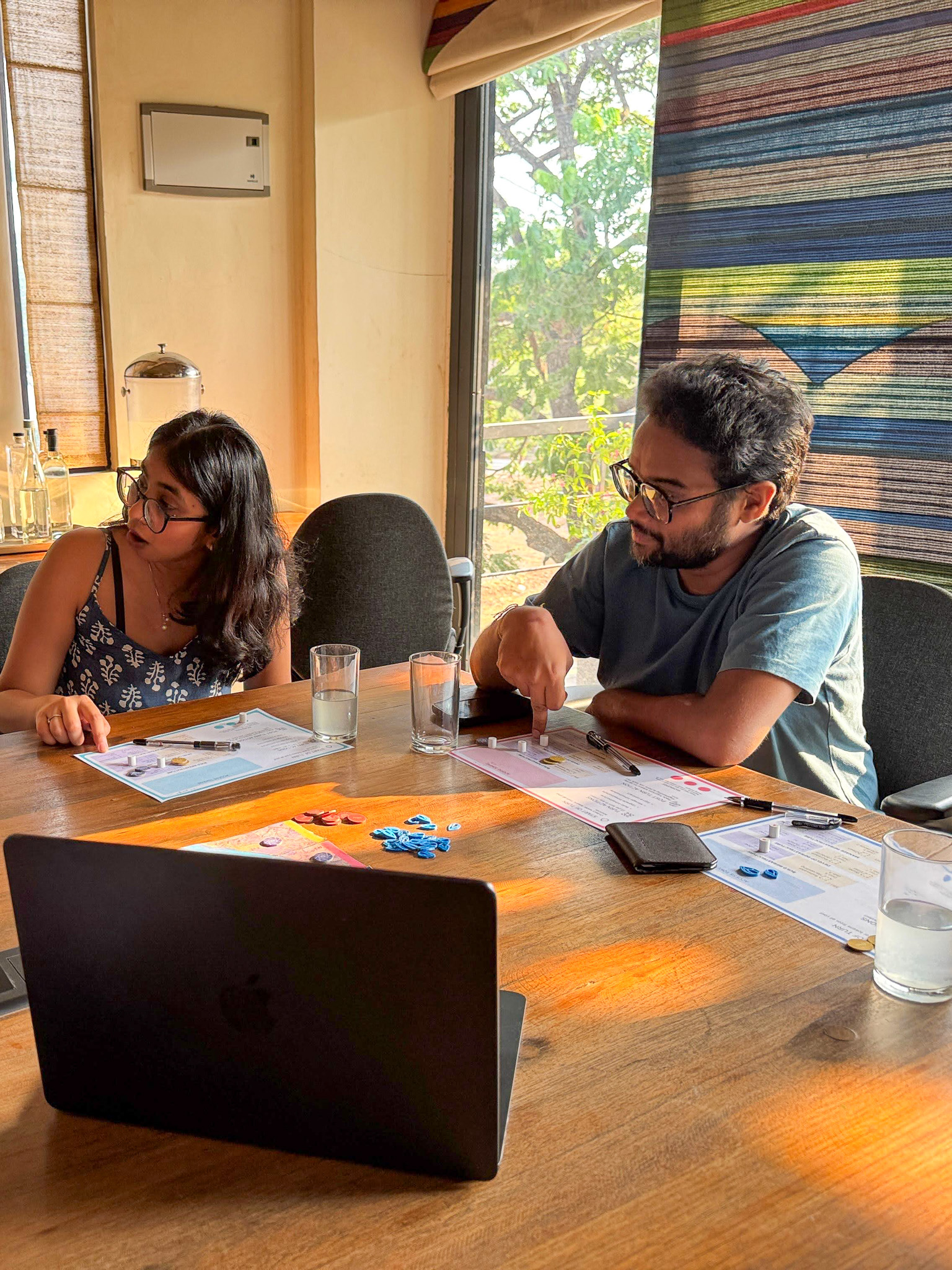
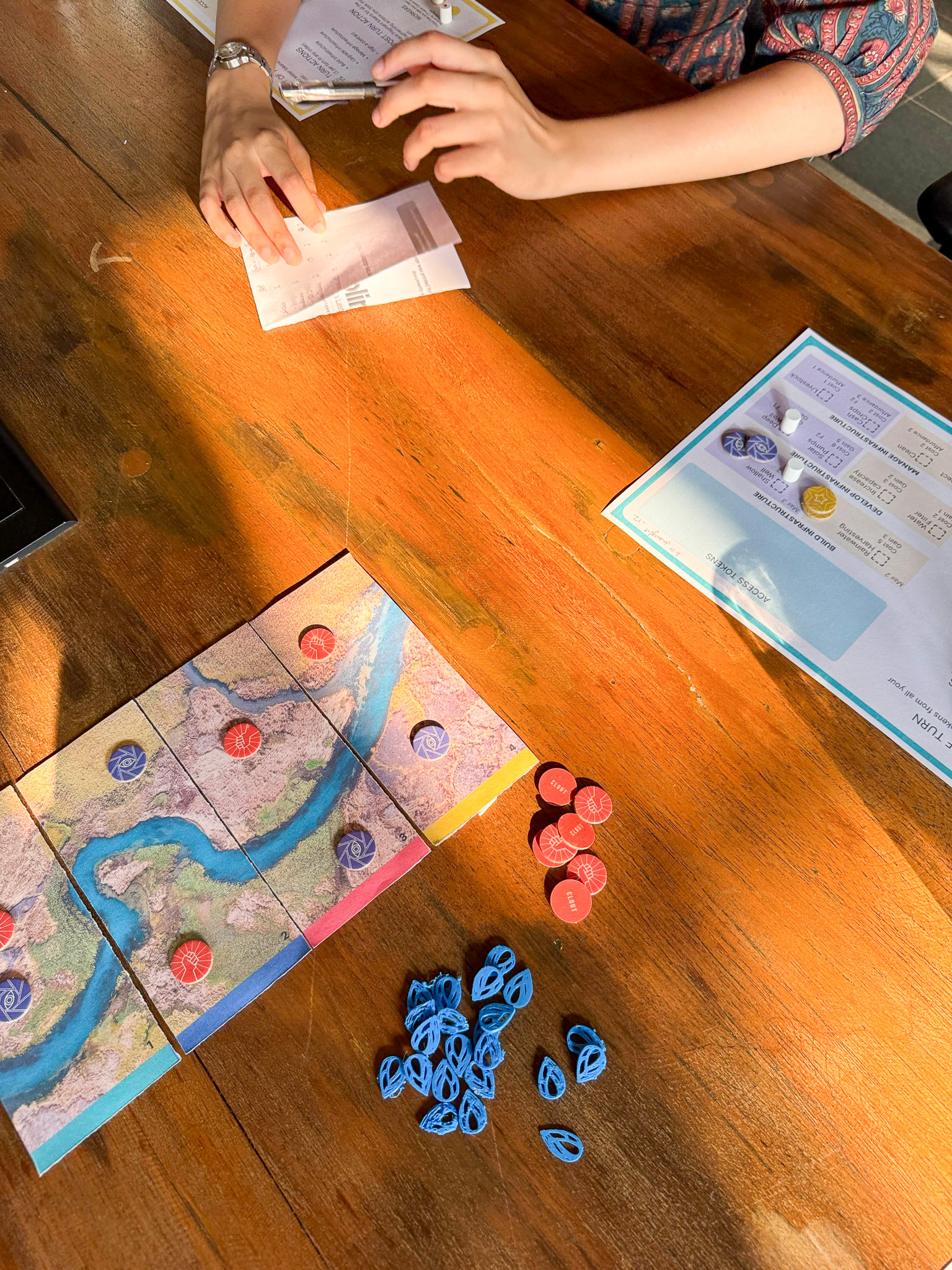
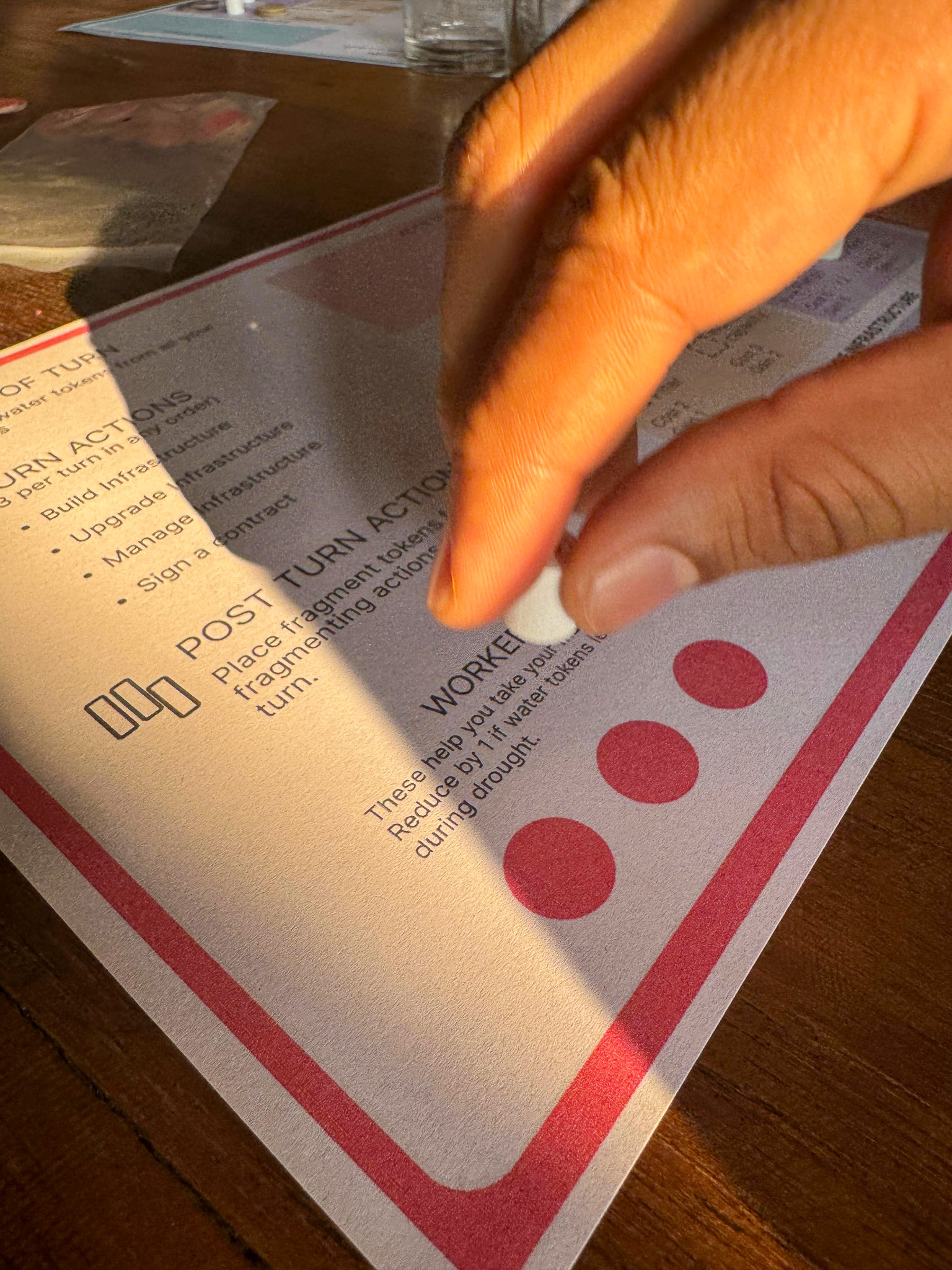
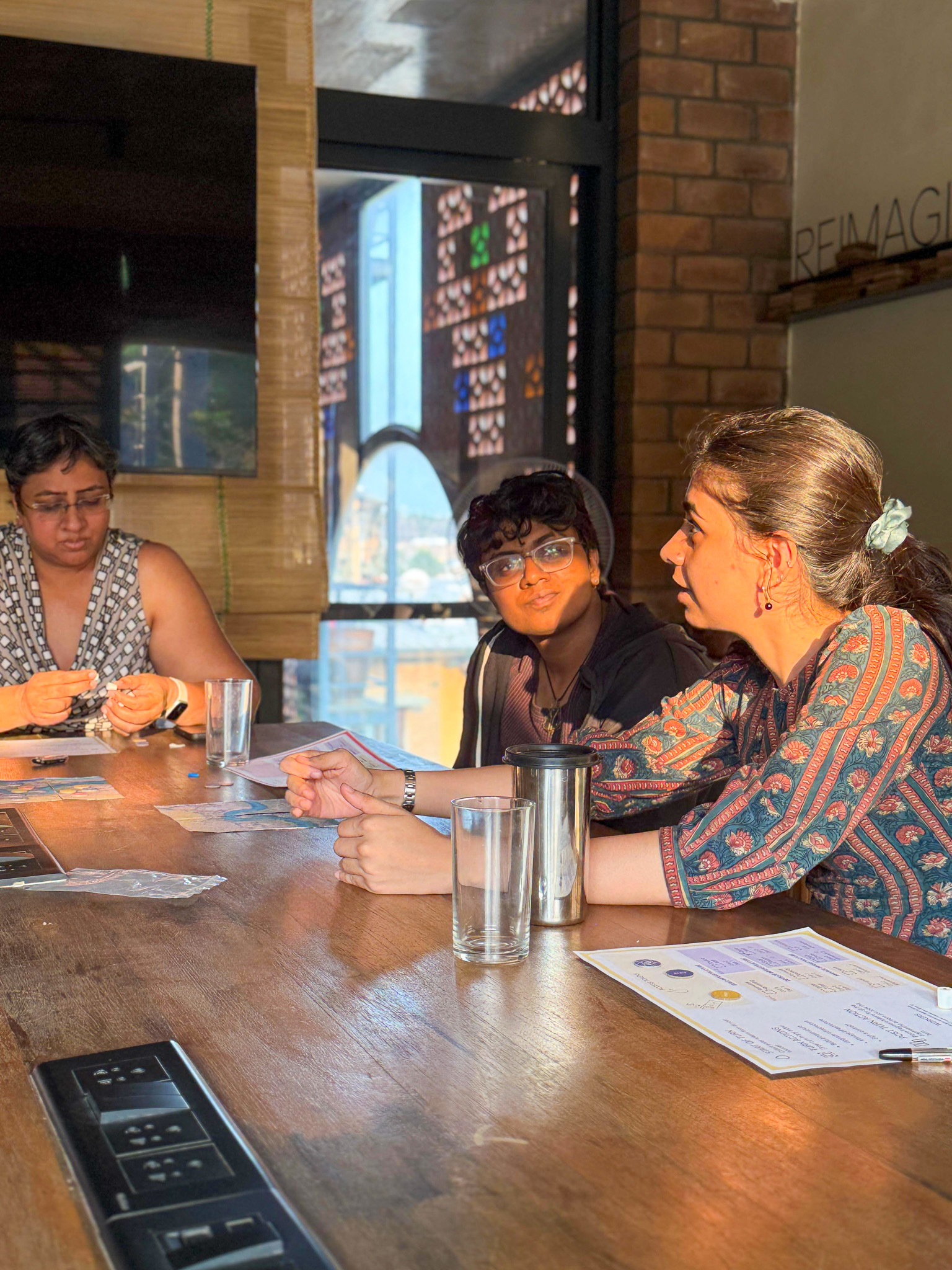
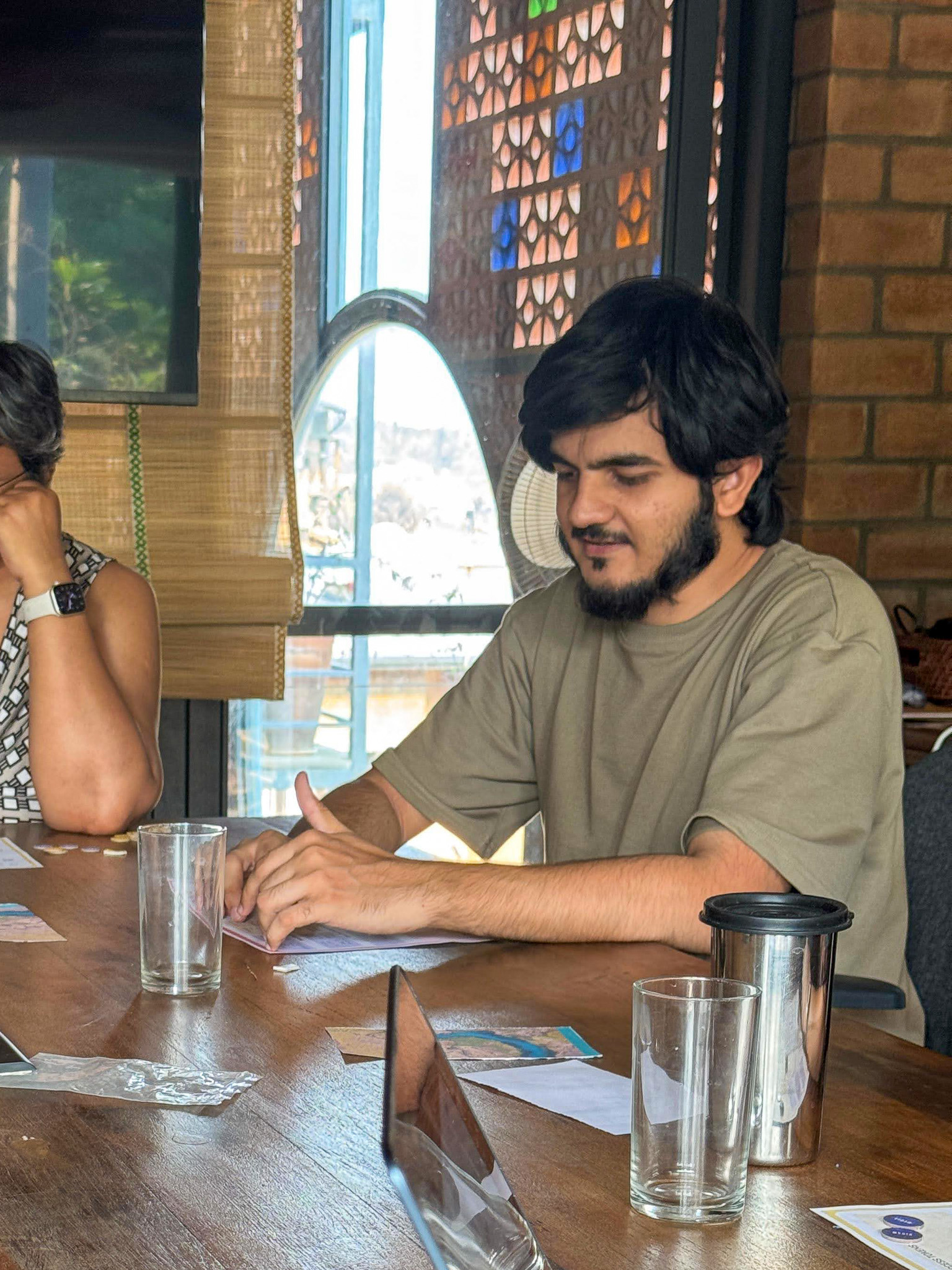
I playtested the first version of Fragments last month. It took a few weeks of thinking, tinkering, writing and getting over a mind block when suddenly a few things naturally came together. I had something playable ready in a week which I wasn’t able to put together in the first month of the residency (what can I say, the creative process can be quite temperamental with its own mood swings). Through handwritten index cards, scrappy tokens, components borrowed from other games and rules that needed refining, players played several rounds of building and managing infrastructure that made their clans resilient to upcoming droughts. While the individual elements – the player actions, the game phases and round structure – showed promise, the game lacked meaningful player interaction, and the overall objective wasn’t landing.
This was an important step in the game design process, and I’m back at the drawing board, working on the next iteration of the game. This is just the first of many playtests to come, as feedback from each session will shape what the game becomes.