Our Supper Club Turns One

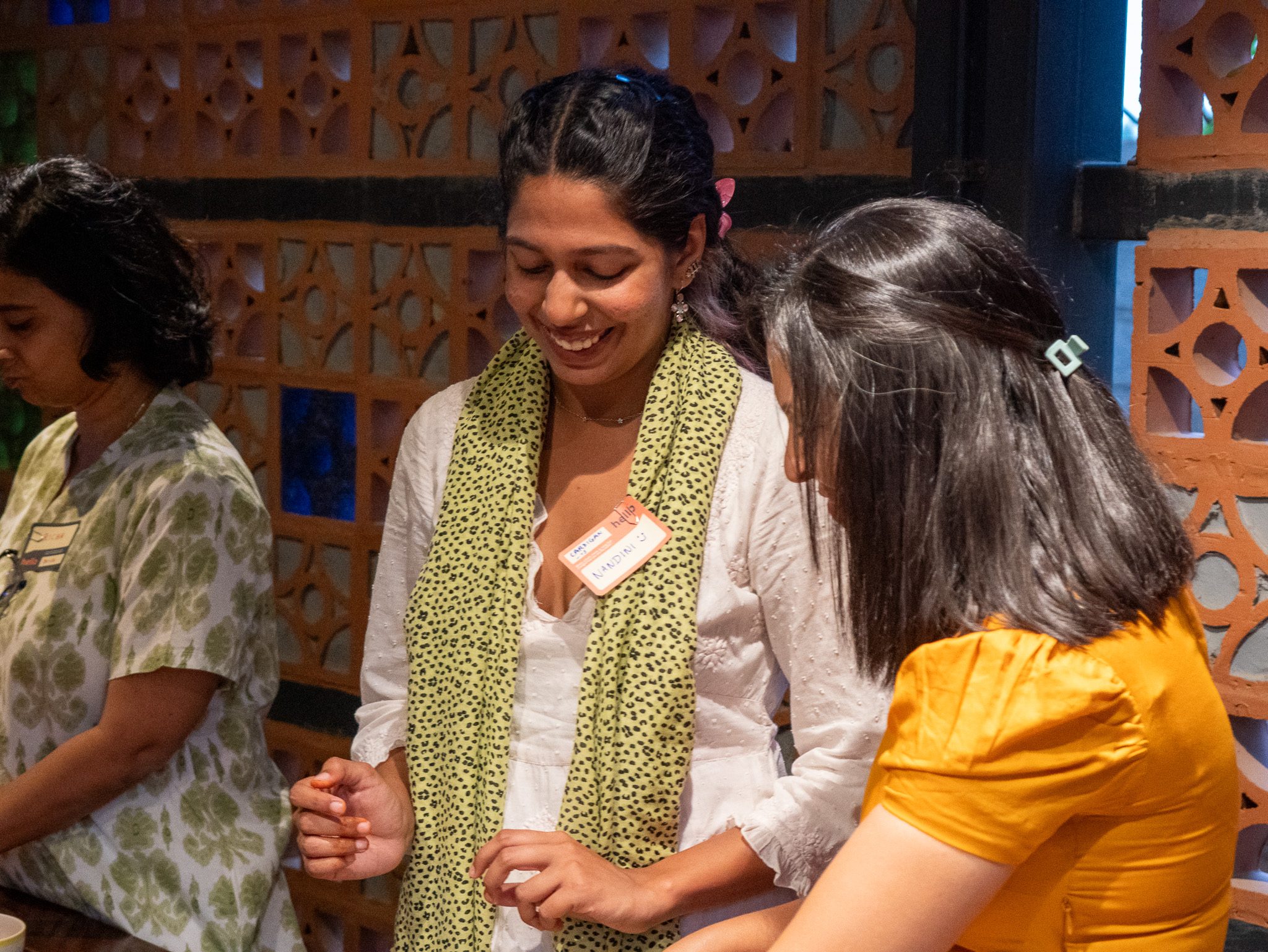
According to the 2025 World Happiness Report, meal sharing ranks among the strongest predictors of well-being, comparable to factors like income and employment. Case in point: our supper club turned one, and we marked it by returning to where it all began, with Spring Into Salads.
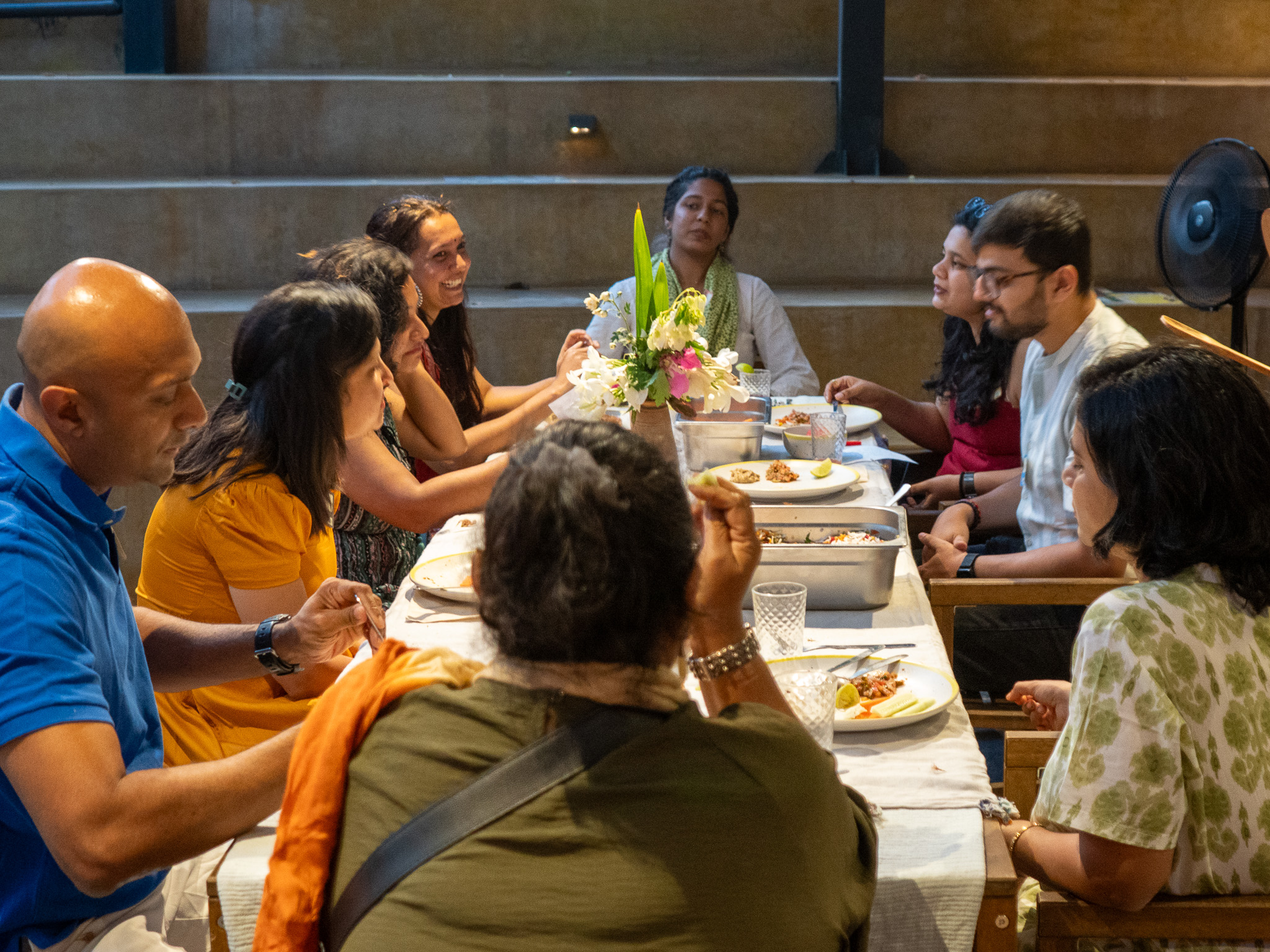
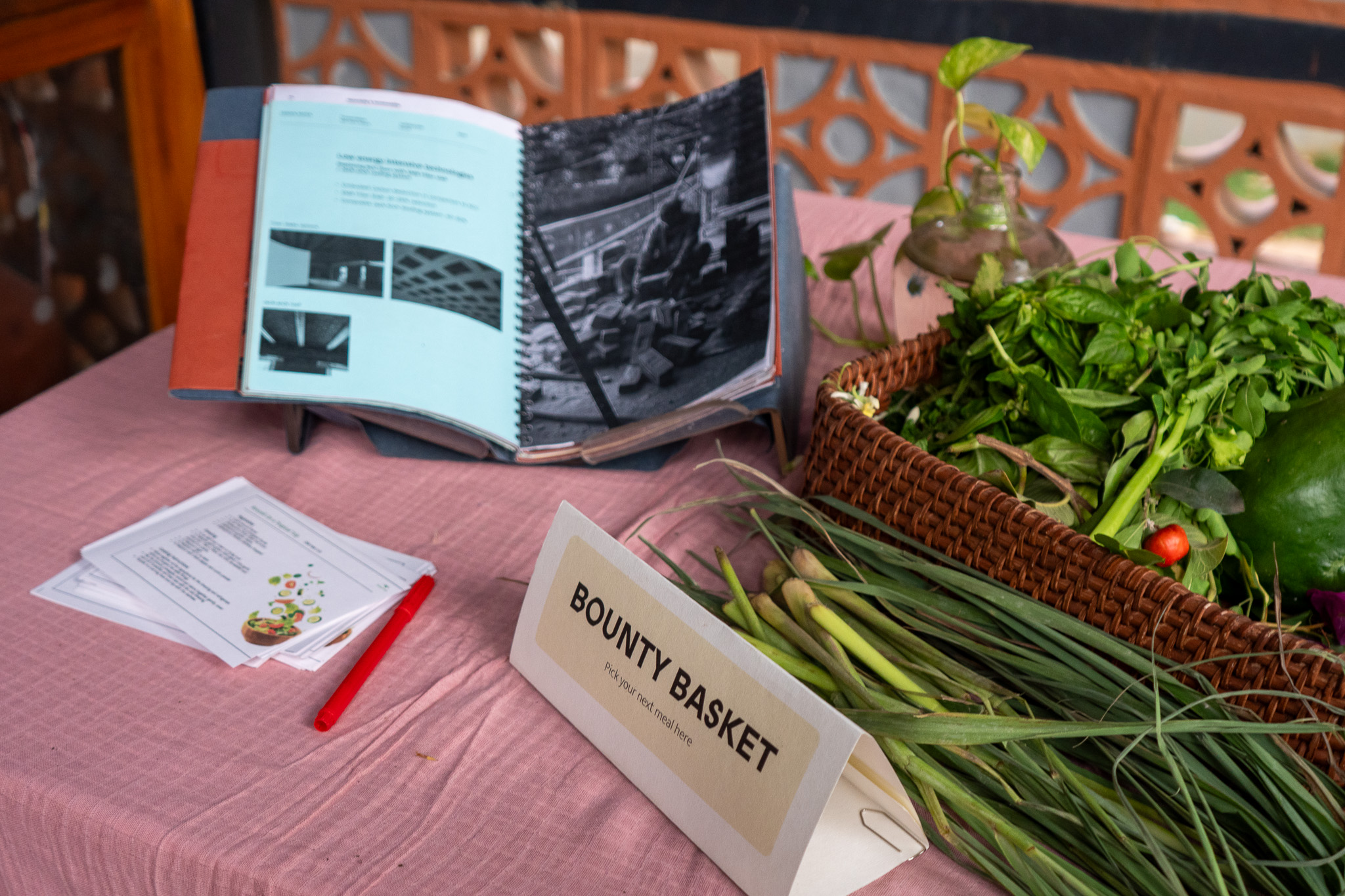


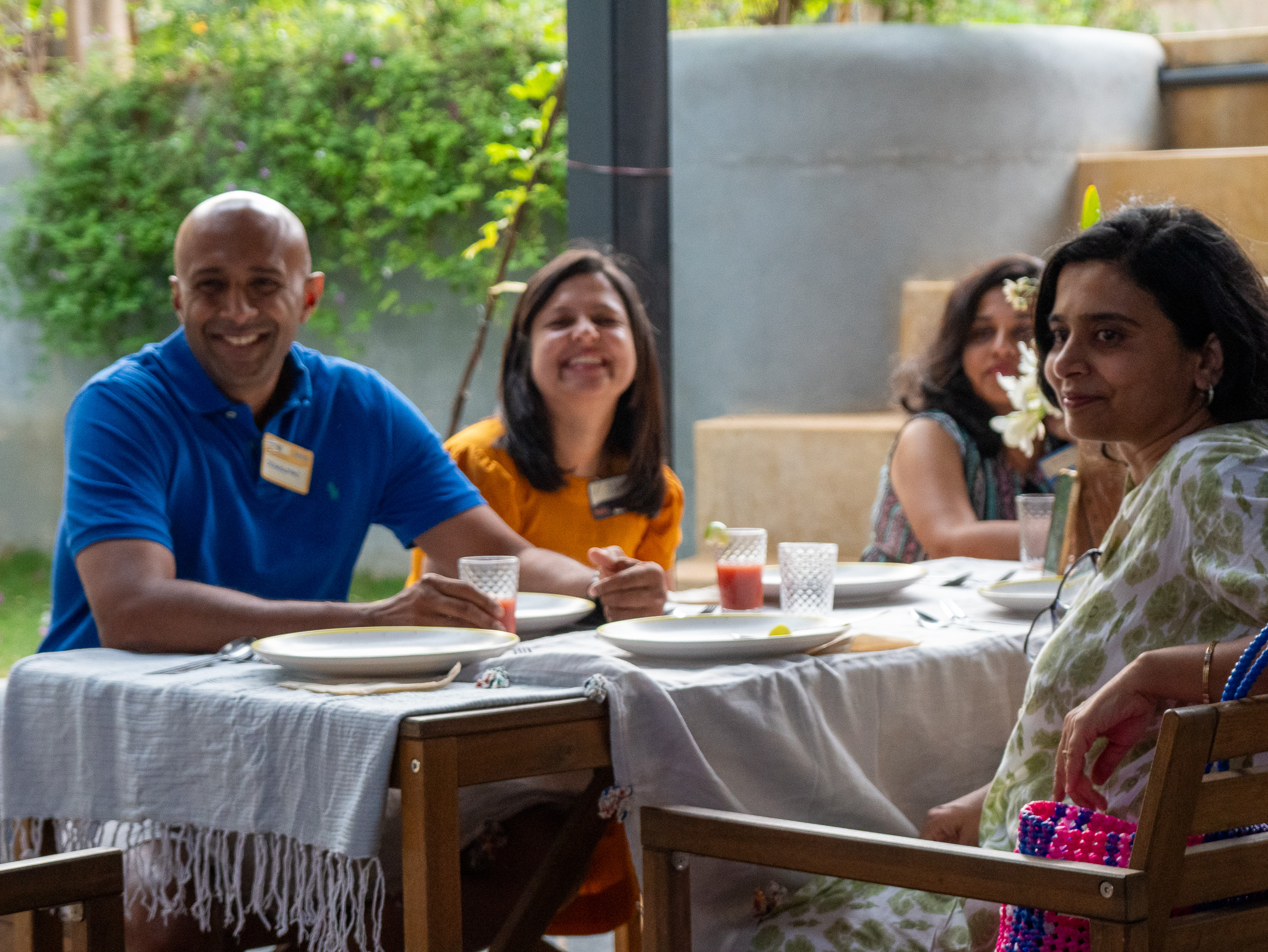
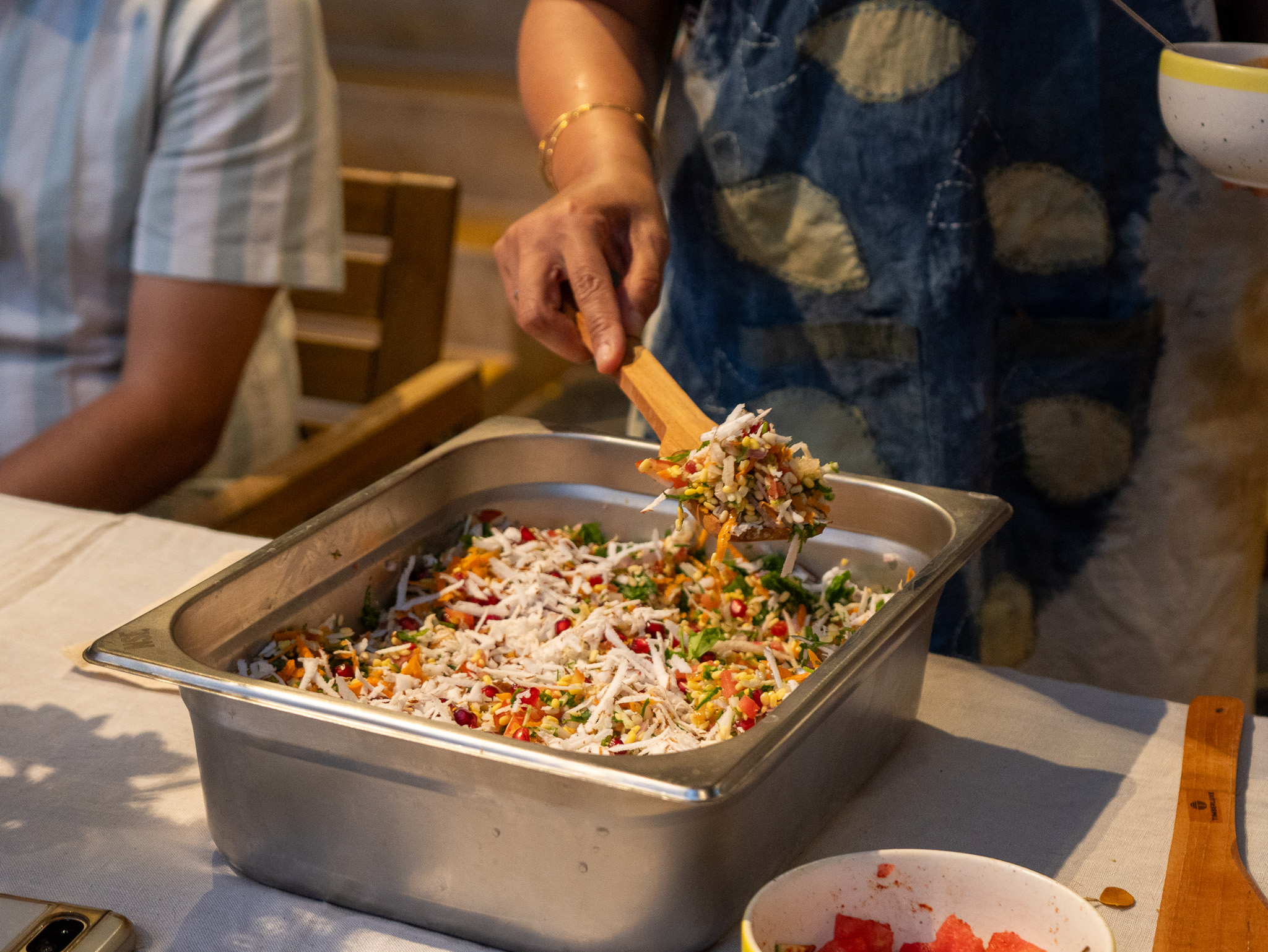
We began with an idea of a simple seasonal theme, and today, it’s become a way of thinking about food, and how we relate to what we ate growing up, which connects us to the real world and marks our identity. This time, we served salads rooted in local traditions, with a modern twist: a kosambari with microgreens and a lemon-butter dressing, a raw papaya salad fresh from the garden, with sesame and thinly sliced red onions.
We also played a small game, tracing flavors back to childhoods, to kitchens, to memories we didn’t realize we still carried. It reminded us why we started: to preserve culture, to eat closer to our land, and to stay connected to the ground realities that shape what and how we eat.
History is full of examples of similar experiments: the Medieval power couple, Richard Beauchamp (the 13th Earl of Warwick) and his first wife Elizabeth Berkeley, who hosted dinners with important figures of the era, with oysters, herrings, haddock, breads, wine and ale, and after the meal, they’d allow attendees to take away as much meat as could be mounted on the blade of a dagger. Closer home, Ain-i-Akbari, an account on the royal Mughal culinary traditions by court historian Abdul Fazl, gives us a peek into several different royal recipes and communal feasts.
Today, there’s a rapidly growing resurgence of communal meal sharing across the world, right from platforms like EatWith that turn homes into shared dining spaces, to community fridges and traveling pop-ups that bring people closer to where their food comes from. All these initiatives aim to make eating less transactional, and for people to feel more connected.
That’s what we’re trying to build as well – an ongoing practice of preserving culture, eating closer to our localities, and staying grounded in the realities that shape our food systems.
One year hence, it feels like we’re on the right track.
Related Posts
View All