Can learning emerge from the act of making?

One of my biggest role models is a modest 19th-century Austrian scientist named Gregor Johann Mendel. Between 1856 and 1863, Mendel patiently bred and crossbred varieties of pea plants to understand how physical traits are passed from parents to offspring. His work eventually became the foundation of the laws of inheritance.


Mendel’s seven-year-long, slow, meditative search for answers feels almost radical today. In the age of artificial intelligence, we have nearly eliminated all friction from the process of seeking knowledge. But I believe that friction is essential. We need to bring back some of Mendel’s rigor and intentionality into the way we learn.
As Paul Salopek – the Pulitzer Prize–winning journalist currently walking around the world – says: “The world is growing complicated. To understand it, we don’t need more information, we need more meaning.” The friction we’ve removed from learning may actually contain the spark for meaning-making.
In 2024, I spent two weeks walking along a dying desert river in India, covering nearly 150 kilometers on foot. I walked through dry riverbeds, fields, and villages, speaking with people I met along the way. That slow movement through the landscape helped me absorb and understand the river in a way no report or dataset could. The river sometimes actively shaped people’s lives and perspectives; at other times, it simply lingered in the background as the setting in which their stories unfolded.
This deliberate pilgrimage allowed me to connect deeply with the people living along the river. Each observation and anecdote slowly formed a larger picture: the health of these communities depends on the health of the river, and the health of the river depends on the health of the communities.
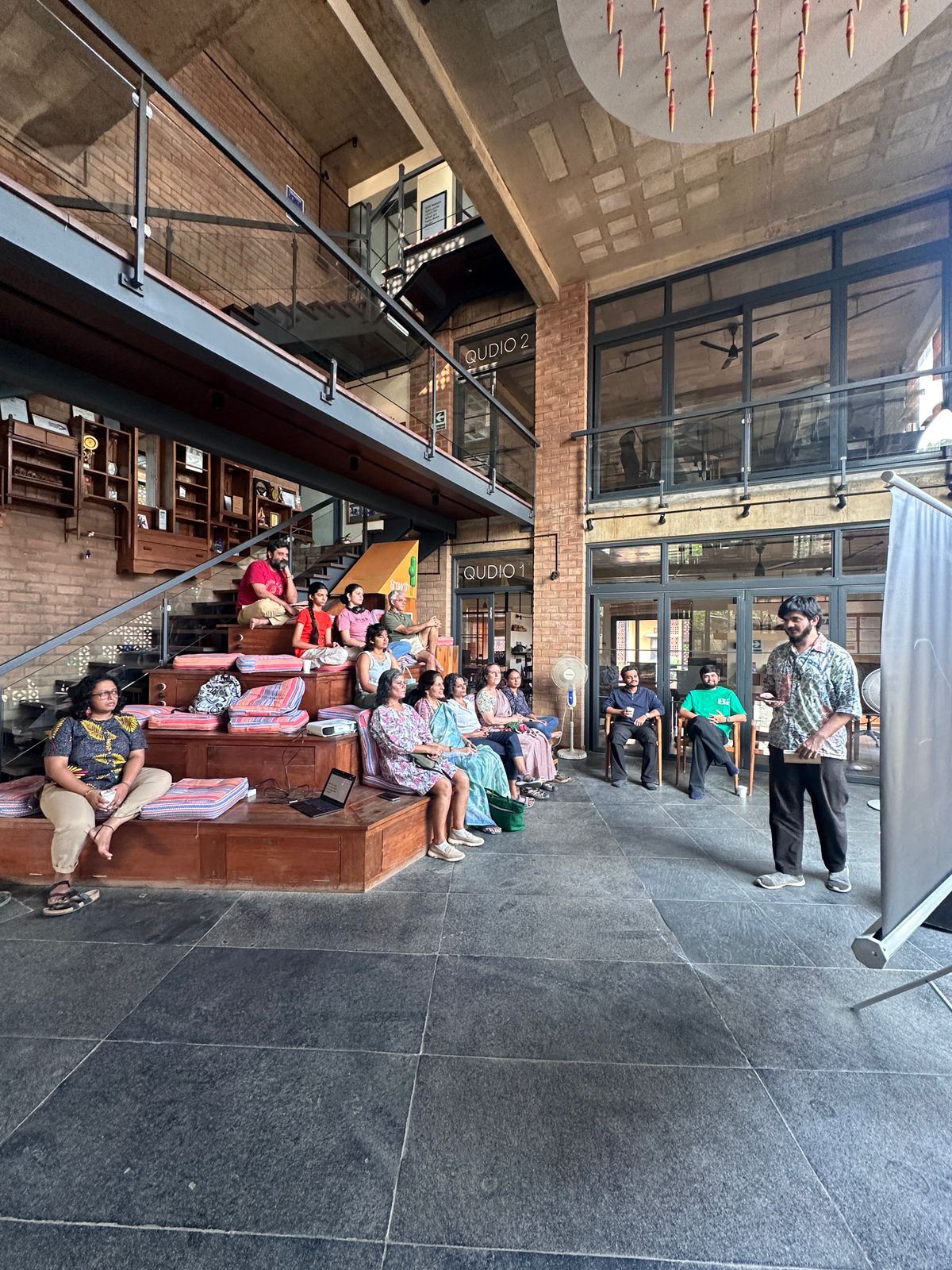
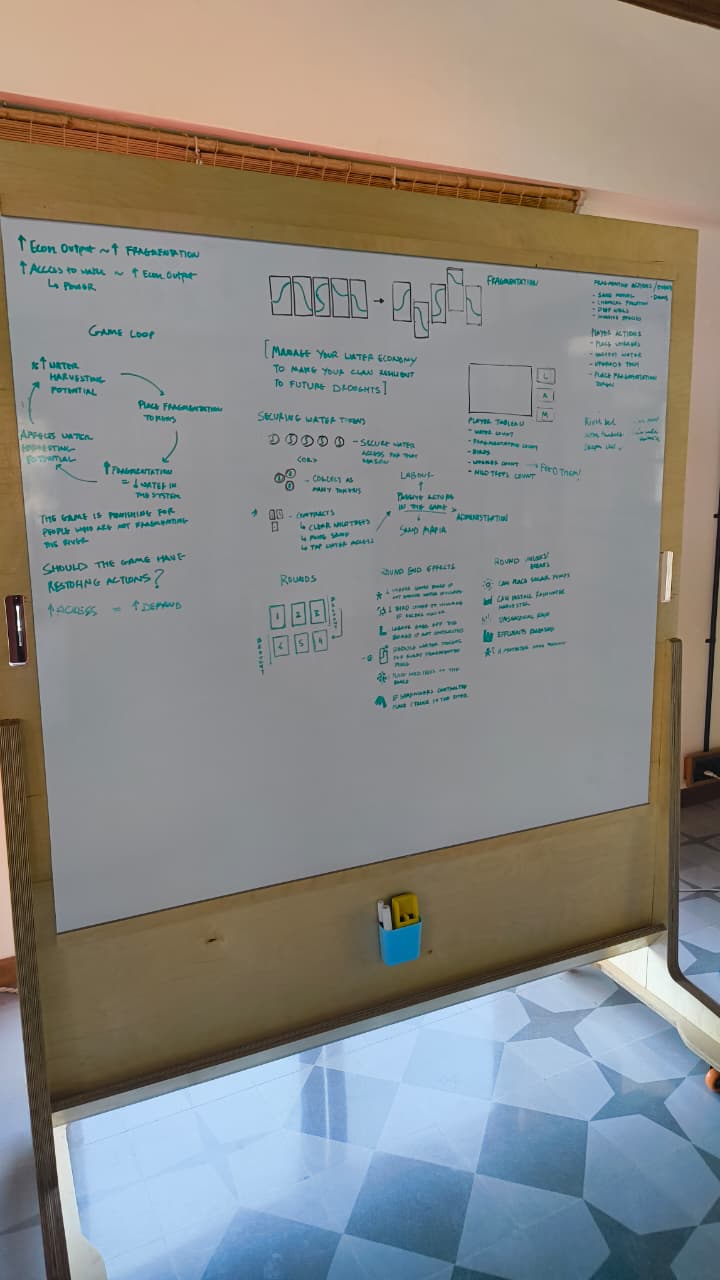
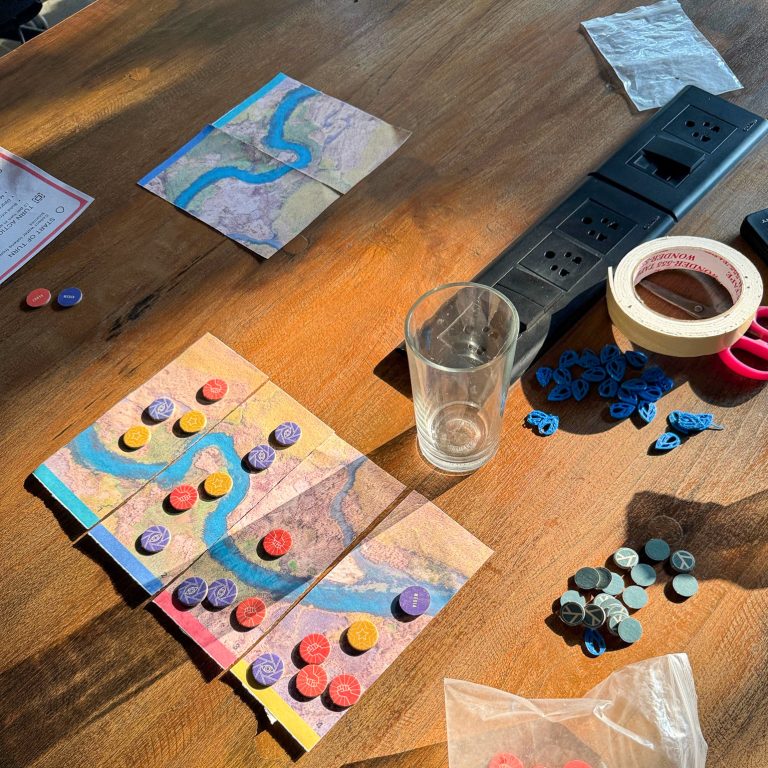
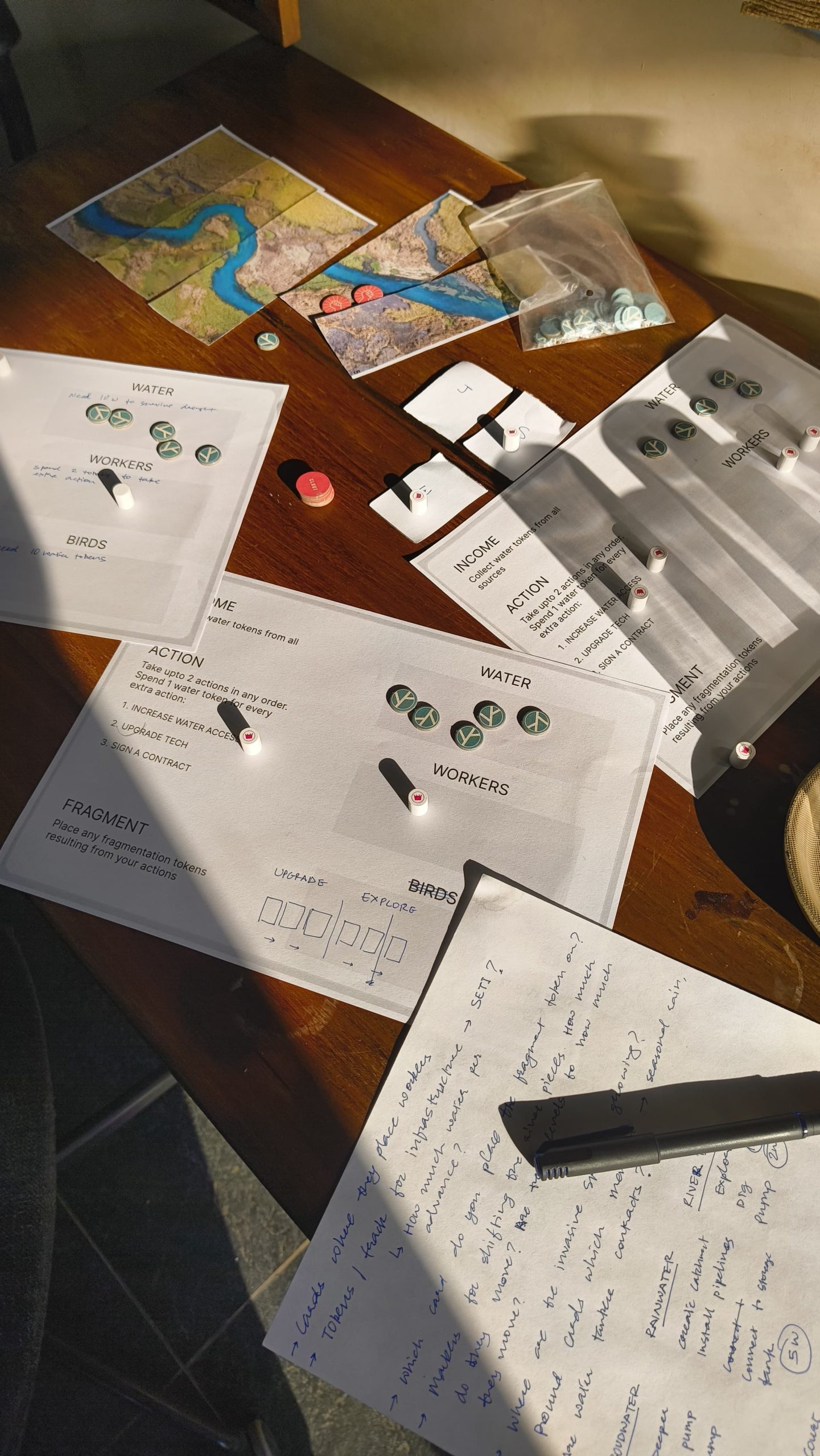
At the Regen Residency, I’ve been working on a tabletop game that tries to make this relationship visible. It is a survival game in which players must manage scarce water resources to help their clan survive recurring droughts. As players navigate trade-offs shaped by ecological collapse and scarcity, the game will hopefully allow them not just to understand these systems intellectually, but to experience and reflect on them emotionally.
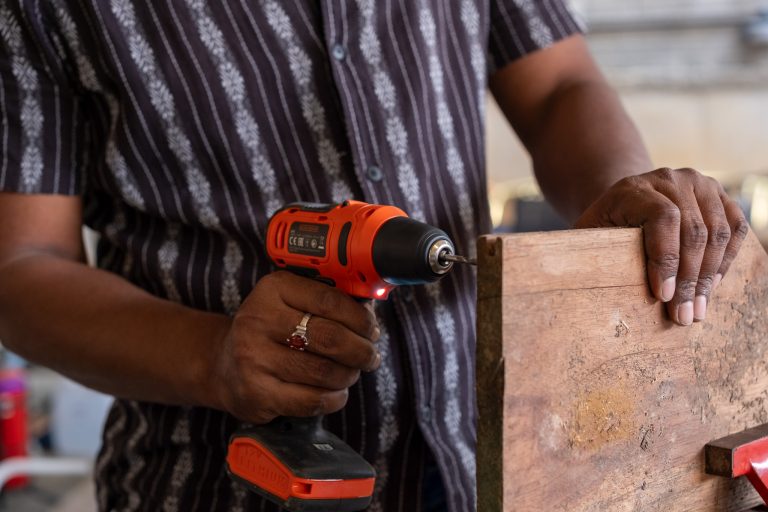
Too often, the act of making becomes centered on the final output. The Regen Residency is trying to shift the focus back to the process itself. It is grounded in the belief that making can help us rethink how we live, learn, and design systems for the future. It treats learning not as the transmission of knowledge, but as its reconstruction.
Cole Wehrle, a historical game designer whose process has deeply influenced me, once said that making has “always been about trying to understand why something happened.”
When I first began working on this project, it seemed like a fairly straightforward resource-management game. But while designing mechanics around the accumulation and distribution of water, I realized that water is never simply a resource moving from source to user. Access to water is constantly negotiated – bargained over, traded, restricted, and seized. There is an inherent power dynamic in who controls water and who does not.
That access and control became the true currency of the region – the foundation of its political economy. Suddenly, I was no longer designing a game about managing natural resources. I was designing a game about managing political power.
The process of making is as meditative as it is generative. When I first wrote about my river walk, I thought I was simply documenting observations. But making the game brought the inquiry itself to life. Every unresolved mechanic in the game now feels like a question I still haven’t answered about the river.
So, can learning emerge from the act of making?
Only if we are willing to sit with questions.
Mendel did not set out to discover genetics. He set out to understand how traits pass from one generation to the next. The meaning came later – slowly, and only because he chose to stay patiently with the process.