Watercolor as a Cognitive and Pedagogical Practice

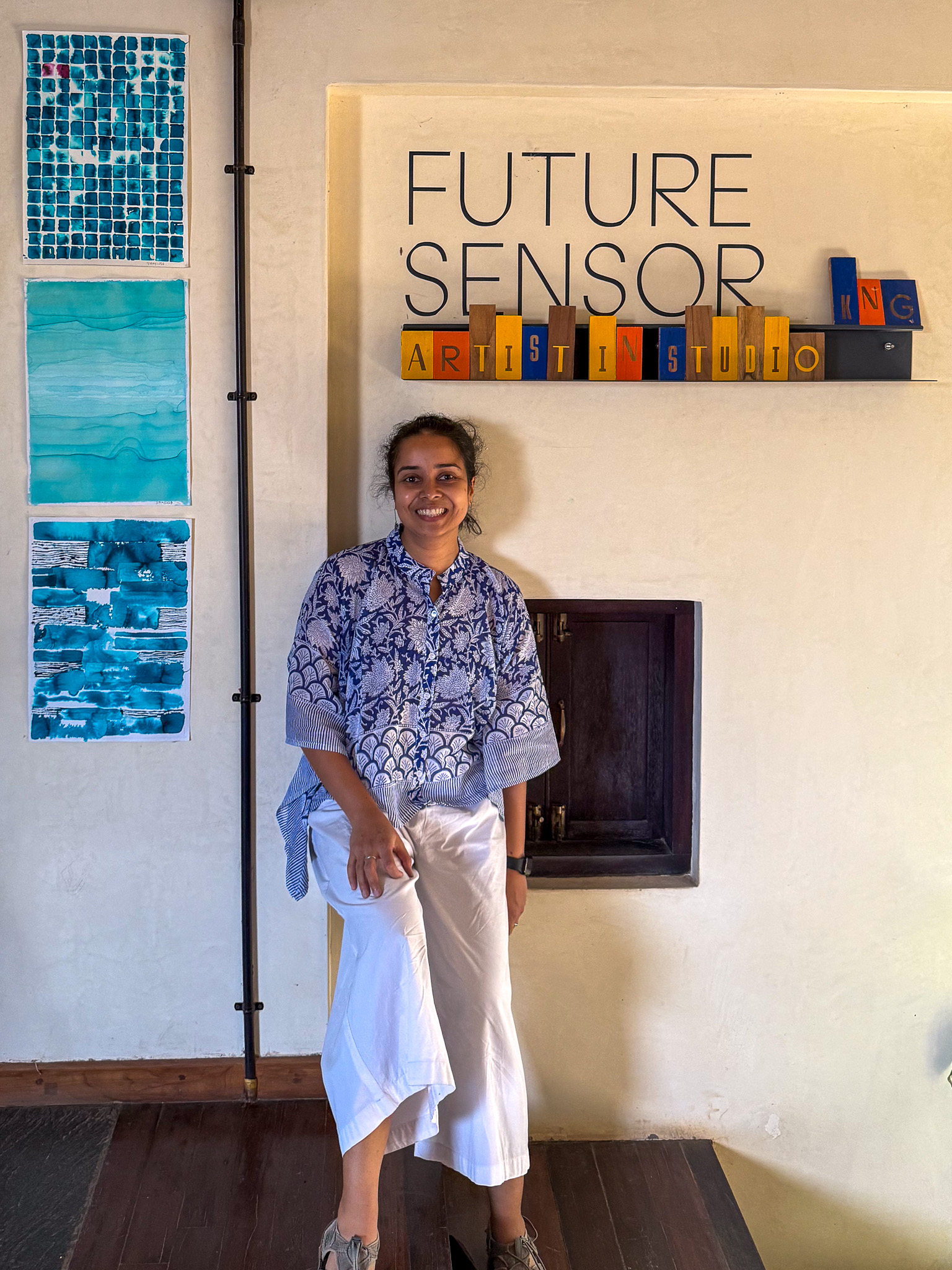
It’s the third week of my Art Residency at Quest Learning Observatory in Bengaluru, and I already feel there is too little time and far too much to explore. Each day, as I arrive at my makeshift studio on campus, my mind races with possibilities, questions, and experiments. I have long hoped for an opportunity like this, and now that it is here, the hours seem inadequate for the range of ideas I want to pursue.


Yet I remind myself that this is a fortunate challenge. I have the space to think, the support of a wonderful team, and the broader QLO community to exchange ideas with and reflect on the outcomes of my experiments.
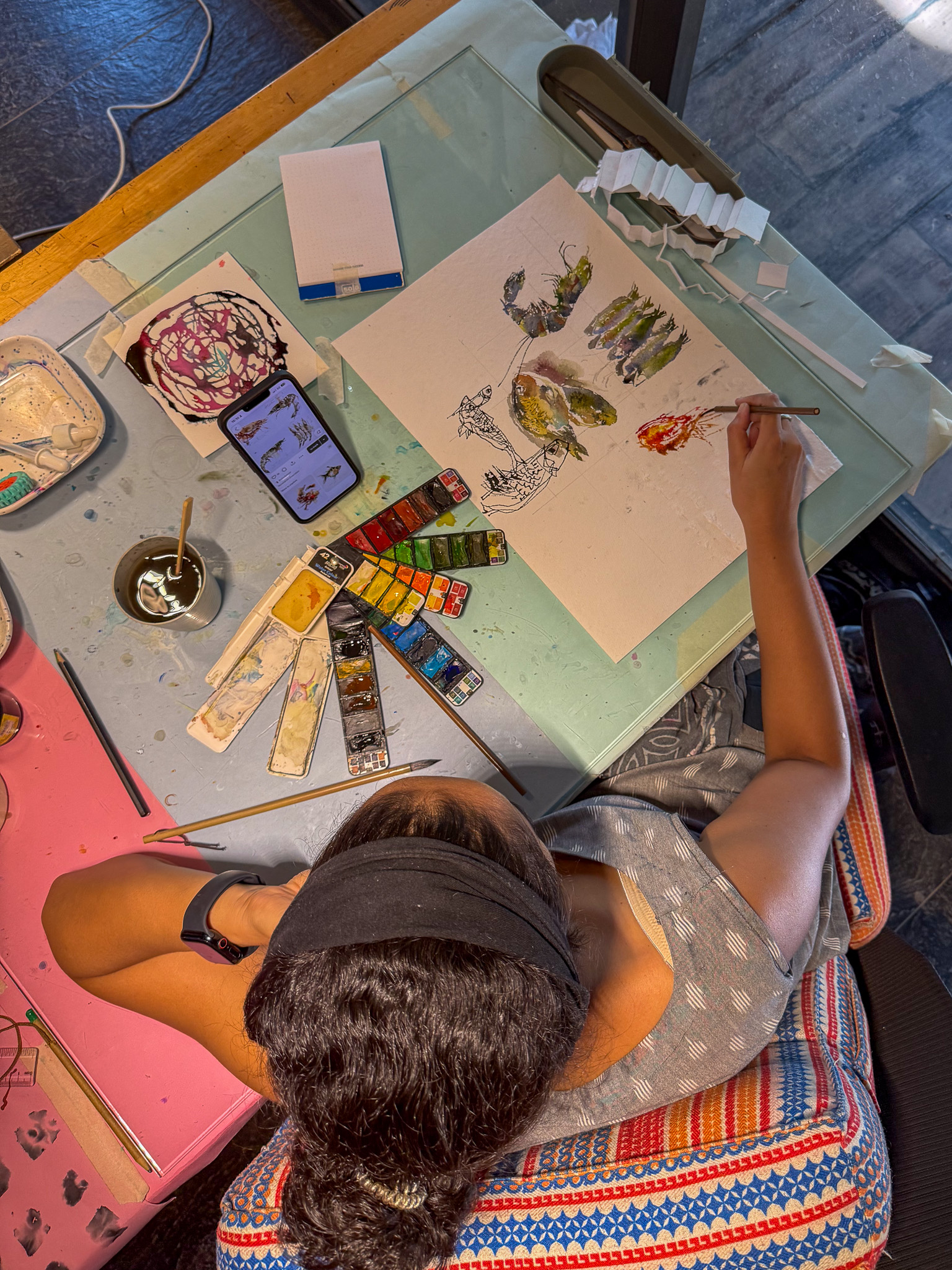
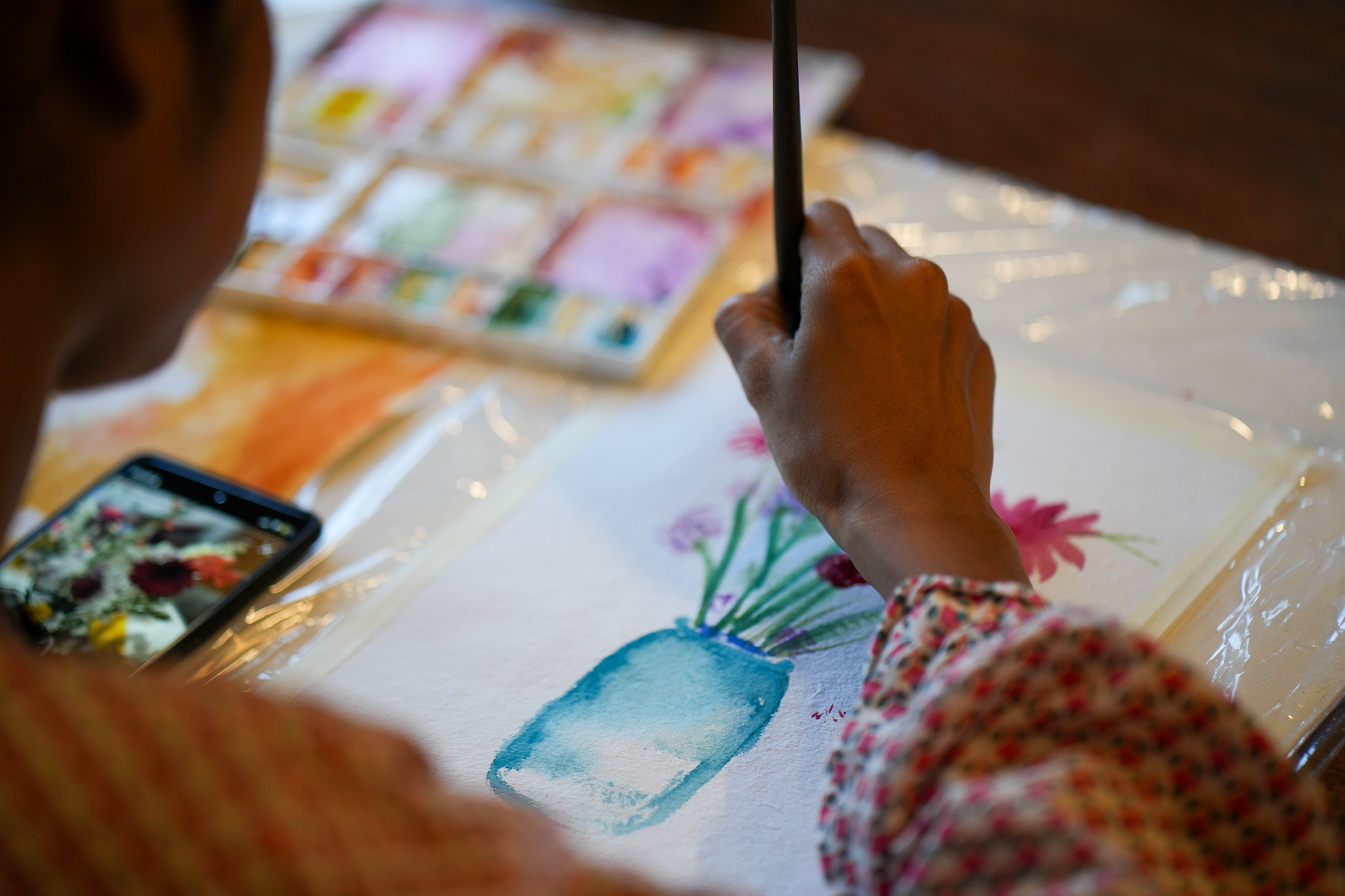
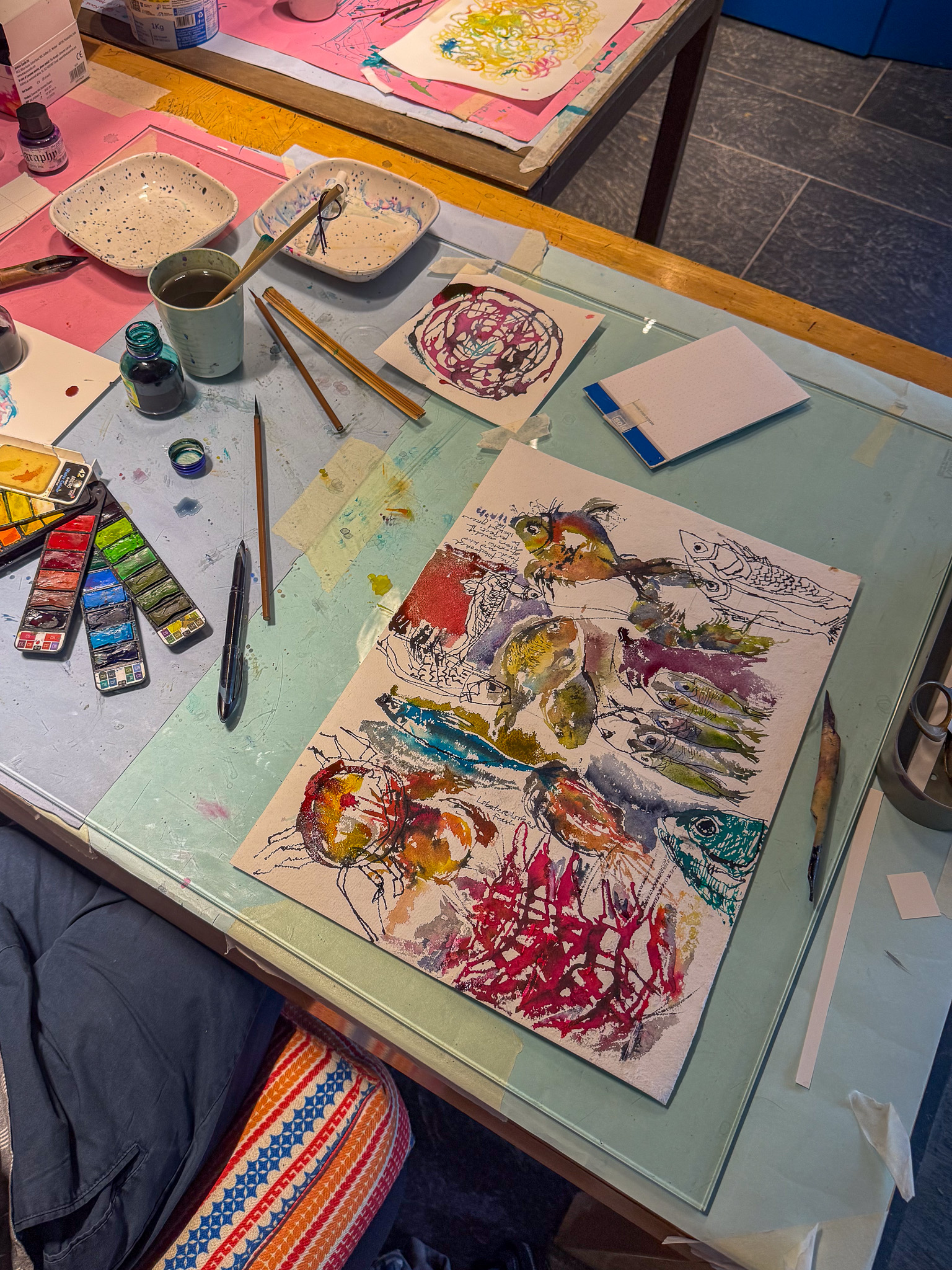
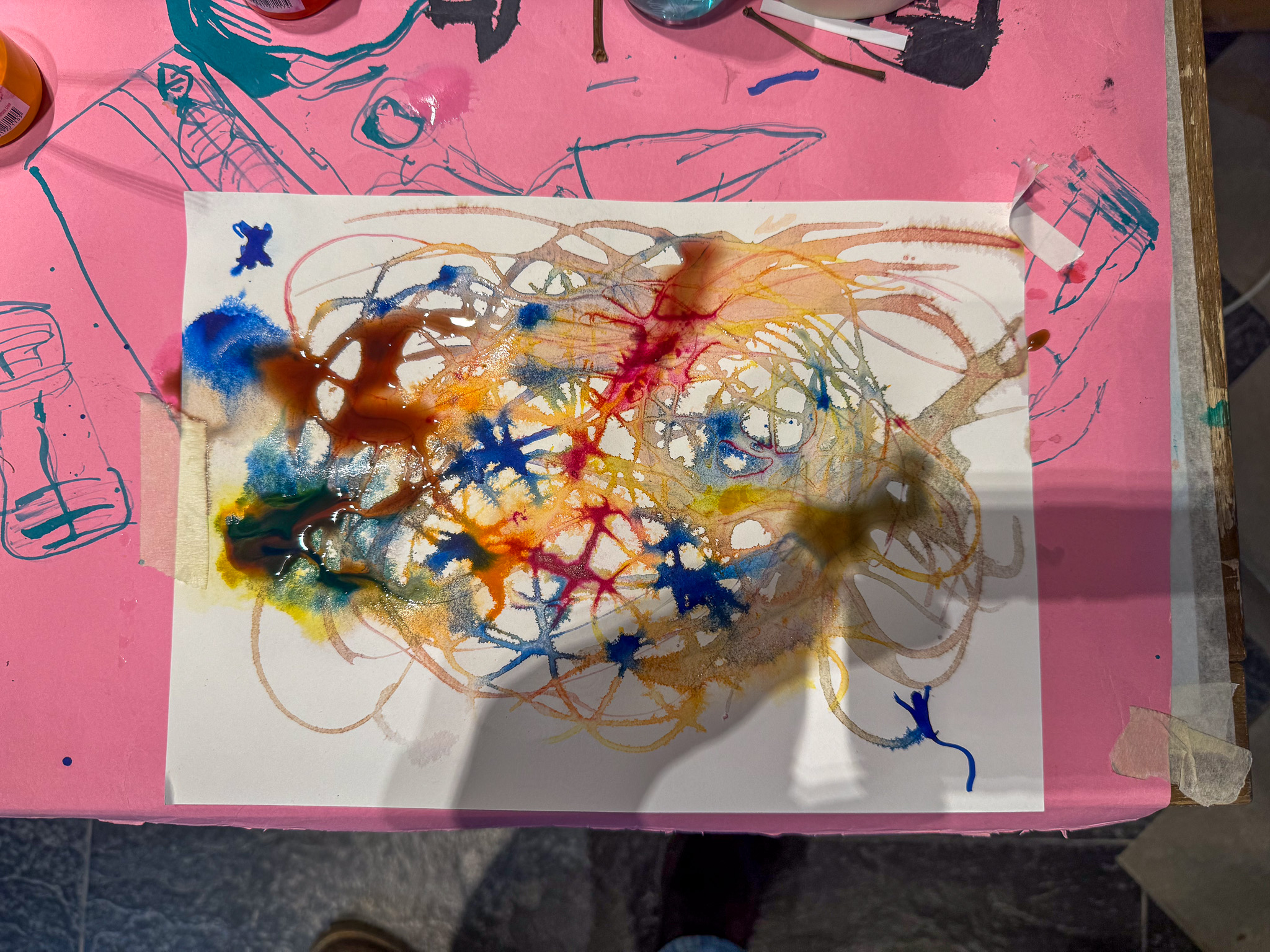
After greeting familiar faces, I settle into the studio with sheets of watercolor paper and ink. The churn of thoughts within me gradually softens as I watch the ink spread, merge with water, and form puddles and splashes across the page. In those moments, the mind settles into quiet attention. I have experienced this feeling for more than a decade, and it is one of the reasons I continue returning to watercolor.
Over the years, I have come to see watercolor as more than an artistic medium. It is also a metacognitive tool.
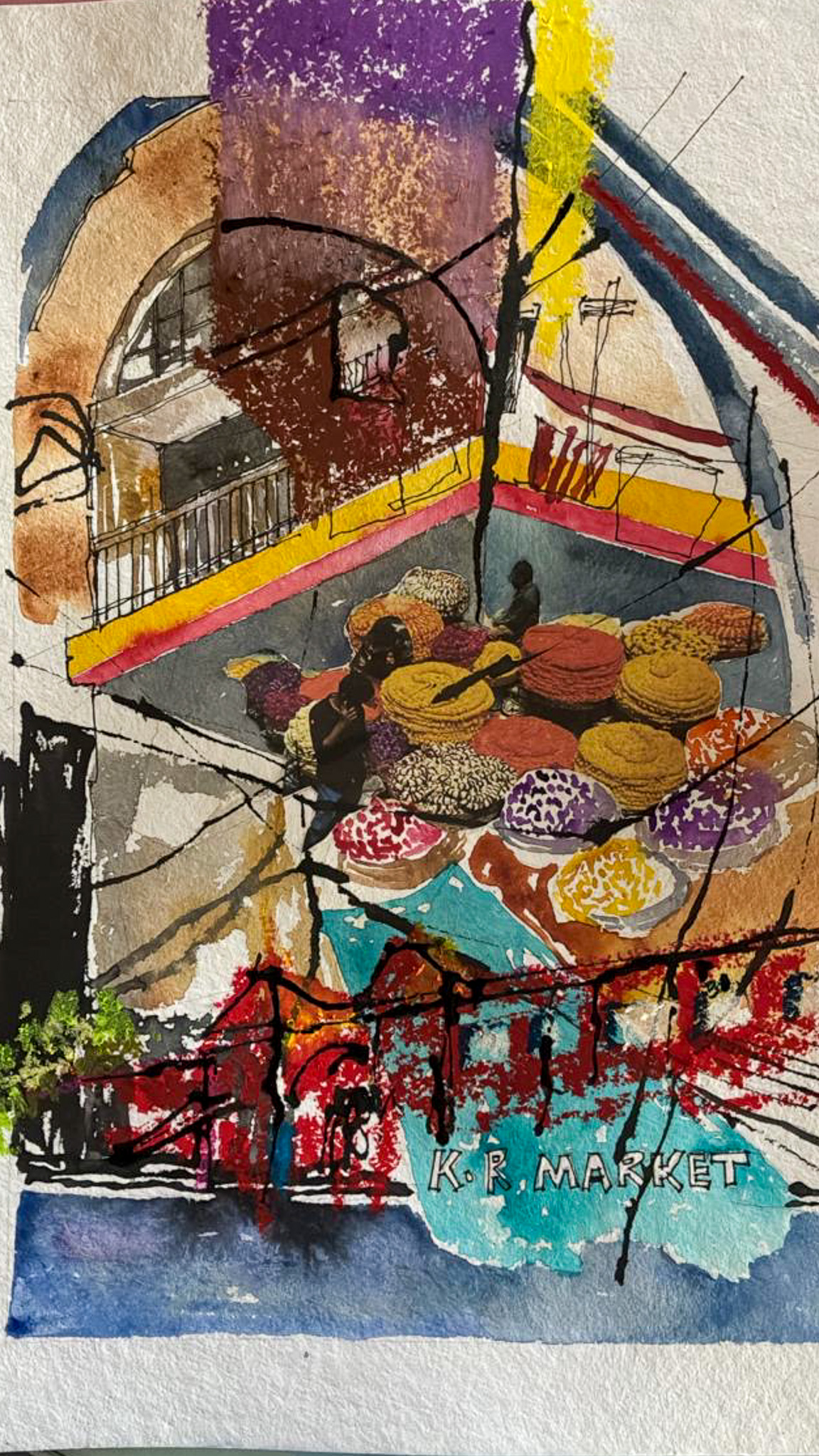
Because watercolor involves multiple dynamic variables and relatively few fixed rules, it reveals how we respond to uncertainty. The mind instinctively searches for control, seeks frameworks, and becomes uncomfortable when outcomes remain unclear. Watercolor resists these impulses. It rewards observation, responsiveness, and adaptability.
Working with the medium gradually strengthens what I think of as our “complexity muscle.” It teaches us to make decisions with incomplete information, remain attentive to changing conditions, and recognize possibilities we could not have planned for. Success depends less on controlling the medium and more on learning how to work with it.
This becomes especially apparent when compared with opaque mediums such as acrylics or oils, where mistakes can often be painted over. In watercolor, every layer remains visible. Many find this unforgiving. Yet that transparency shifts attention away from perfection and toward engagement with the process itself.
What begins as an artistic practice gradually reveals itself as a way of thinking about life.
Most of our everyday experiences unfold under conditions of partial control. Relationships evolve unpredictably, careers shift in response to unseen variables, and plans are interrupted by timing, emotion, or chance. Watercolor behaves similarly. Pigment blooms unexpectedly, water redirects edges, and layers interact differently each time. Attempts to overcorrect often create more disruption than the original mistake.
Over time, the practice teaches when to act, when to wait, and when to allow a process to unfold all on its own. It cultivates presence, patience, and attentiveness, all qualities that feel valuable in a world that often rewards certainty and speed.
This orientation toward process has important implications for education as well.
Learning is seldom linear. Students, much like watercolor itself, respond differently to the same conditions. Identical instruction can produce entirely different forms of understanding depending on prior experiences, confidence, emotional state, or curiosity. Educators who become comfortable with uncertainty are often better equipped to recognize learning as a dynamic process rather than a mechanical one.
Such a perspective also creates greater room for experimentation. Confusion, divergence, and unexpected outcomes cease to be signs of failure and become indicators of genuine engagement. Much like pigment spreading across wet paper, understanding often develops through nonlinear pathways.
Watercolor also sharpens observation. Because the medium requires continual adjustment to subtle shifts in moisture, timing, transparency, and layering, it trains practitioners to notice nuance rather than rely on assumptions. For educators, this translates into a deeper sensitivity to learners, contexts, and emerging possibilities.
Perhaps most importantly, watercolor reminds us that growth is rarely a matter of perfect execution. It is an ongoing relationship with uncertainty, interpretation, and change.
For me, that may be watercolor’s greatest lesson. Beneath its washes, blooms, and happy accidents lies an invitation to become more attentive..to the process, to ourselves, and to the many things that cannot be fully controlled but can still be meaningfully engaged with.