What Does It Mean to Make a Print?

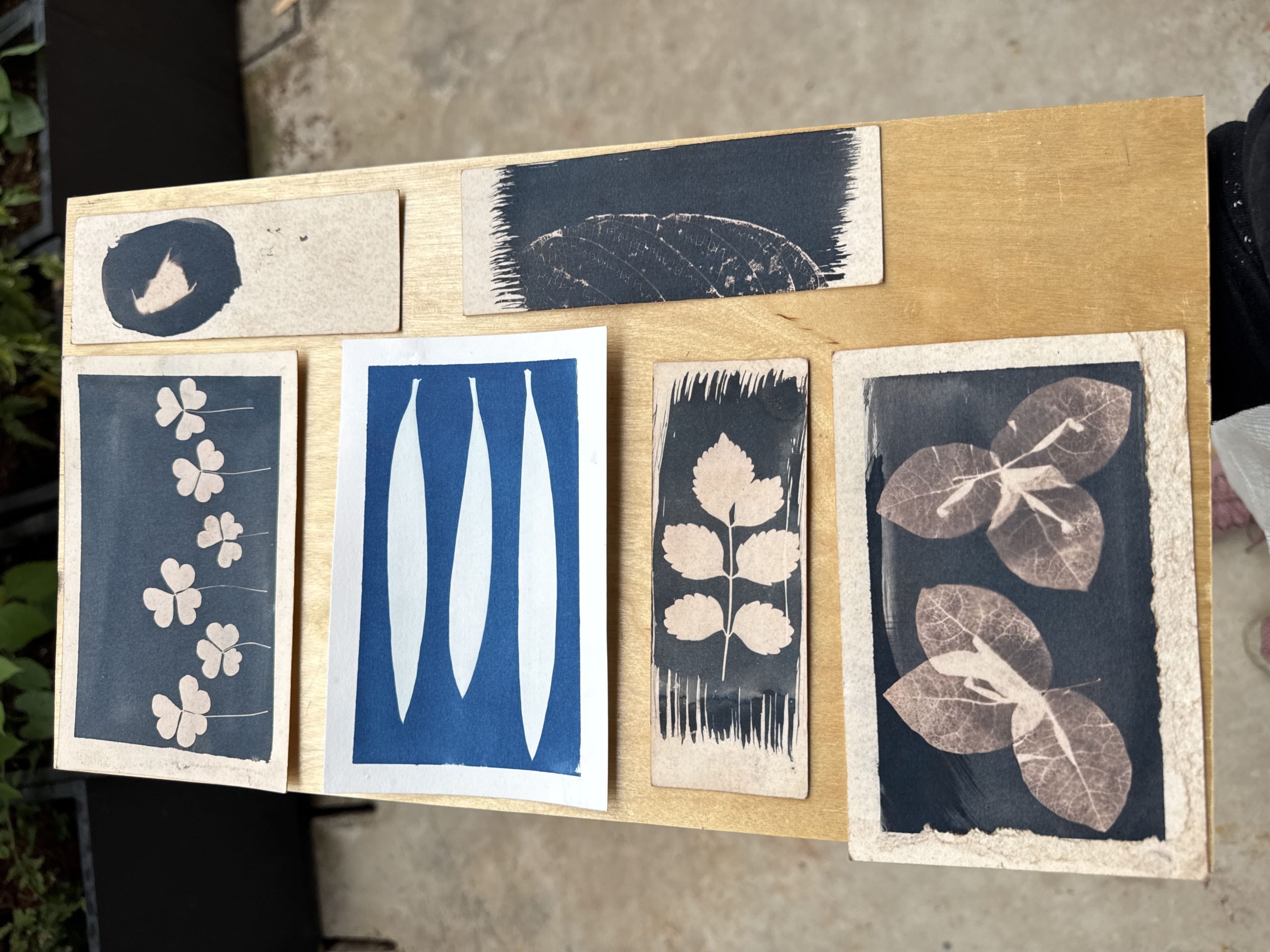
One of the oldest surviving photographs is a cyanotype print, a contact print of algae made by a botanist named Anna Atkins in 1843. She pressed the plant directly onto paper coated with chemistry, exposed it to sunlight, and washed it in water. What remained was an image in Prussian blue: the exact shape of the thing, captured by light, recorded without a camera. She called them *sunshine records*.


I’ve been thinking about that phrase while I am making my own prints at QLO.
Cyanotype is the process I’ve been working with for the past few years. I came to it during a residency in Finland, in a workshop that asked a question I hadn’t thought to ask before as a photographer: what would it mean to make photography sustainable? To use sunlight instead of electricity, plants instead of synthetic chemicals, and working with existing materials. It changed how I was paying attention to tools and objects around me.
At QLO, I arrived with a research question about ships. What happens to materials when they reach the end of their designed life, about circularity and recovery and the global economy of things we don’t often look at. But what I found was that the space was already within that question.
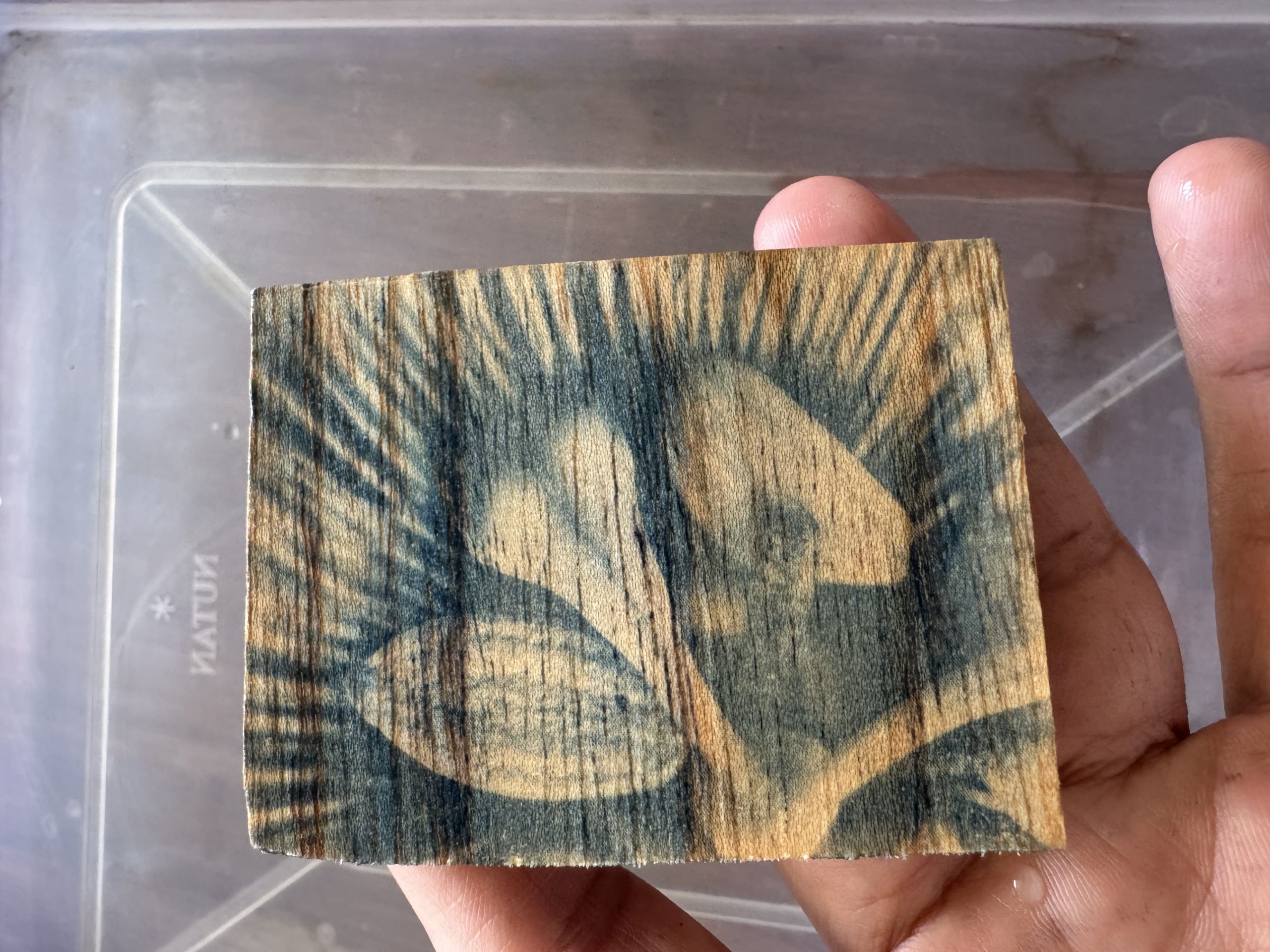
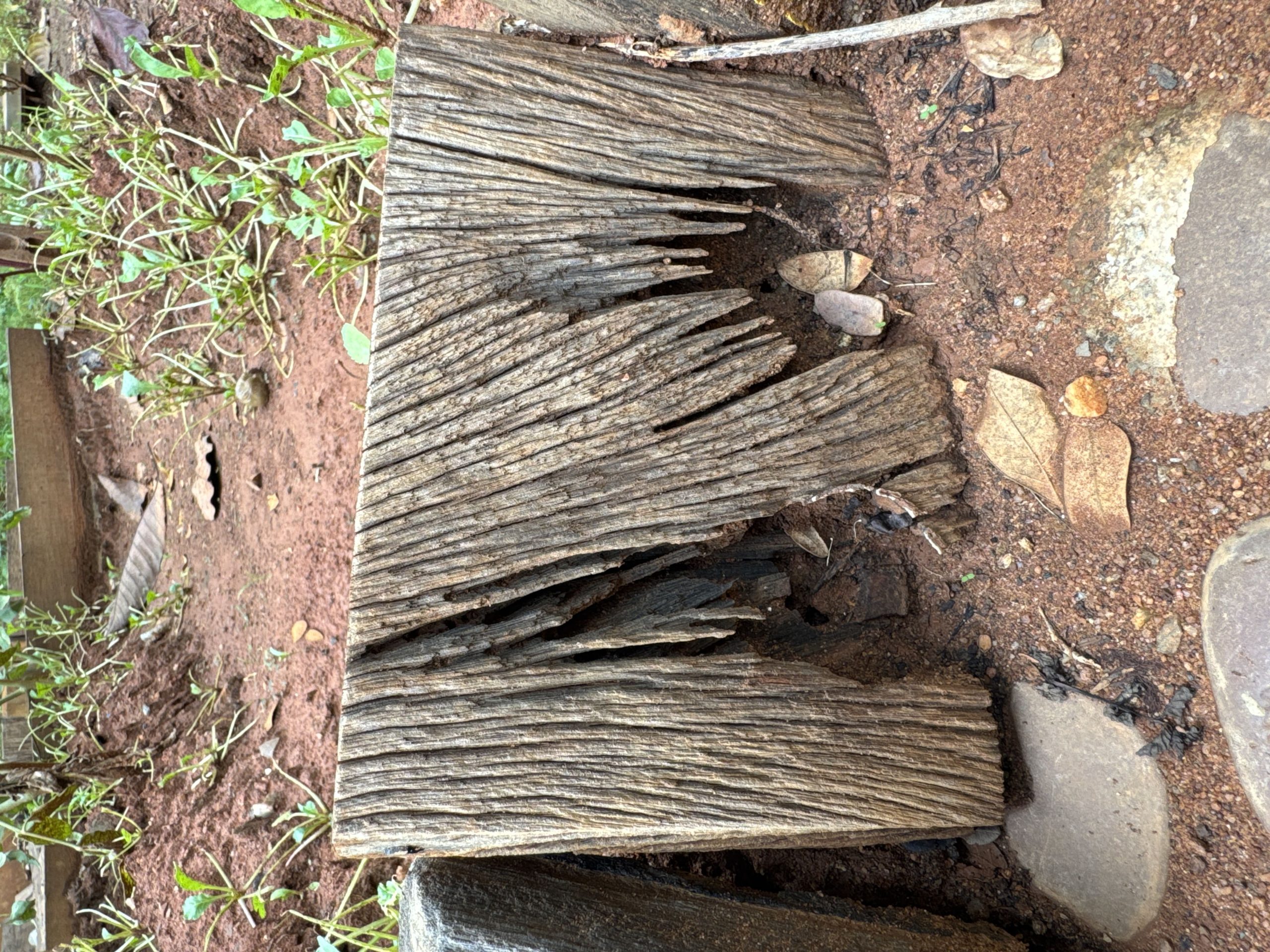
The wood at QLO and some of the furniture, the flooring, parts of the structure came from decommissioned ships. Reclaimed materials, given a second life in a space dedicated to learning and making. I hadn’t expected to find my research in its next chapter at QLO which embodies its own questions.
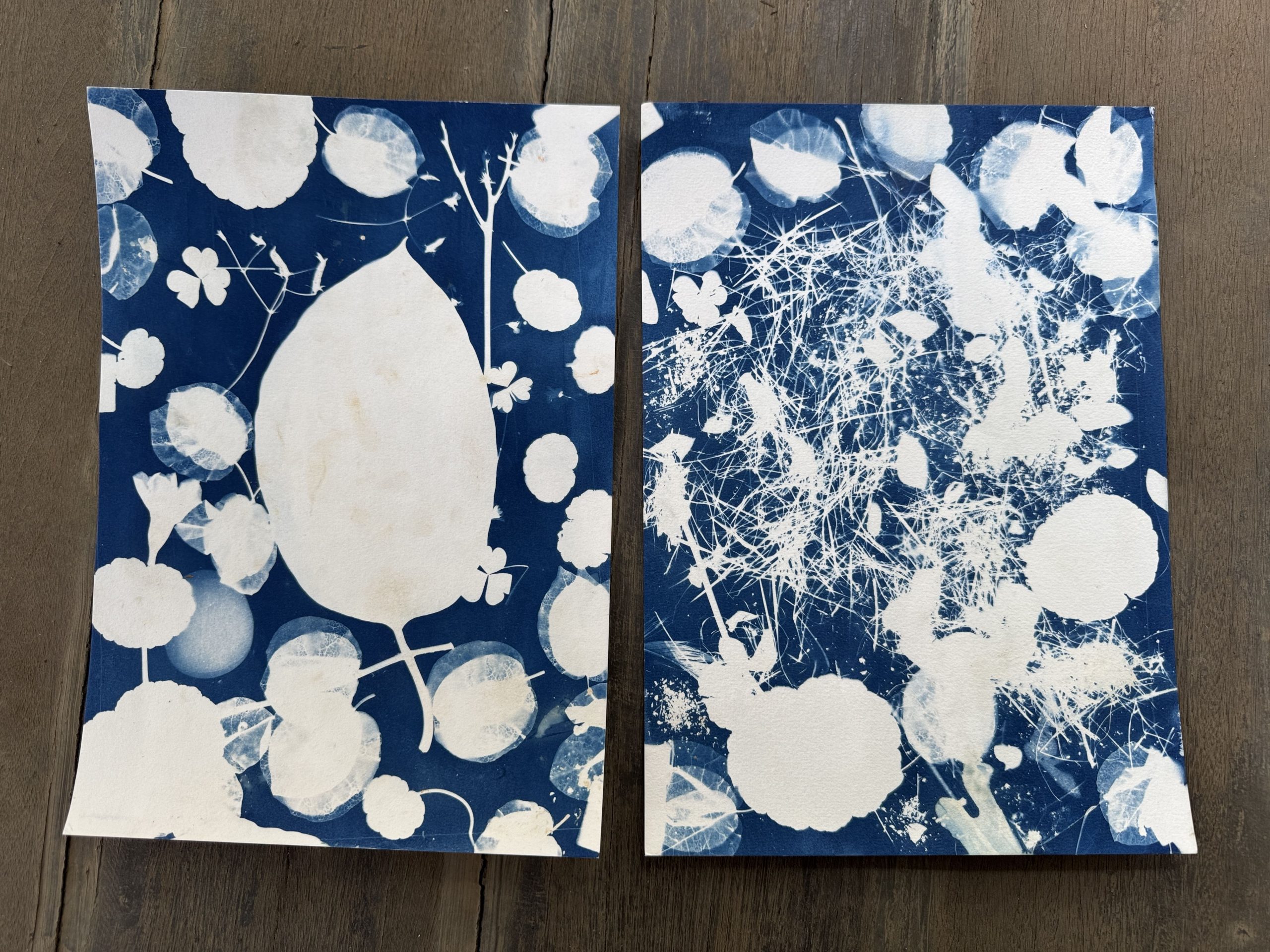
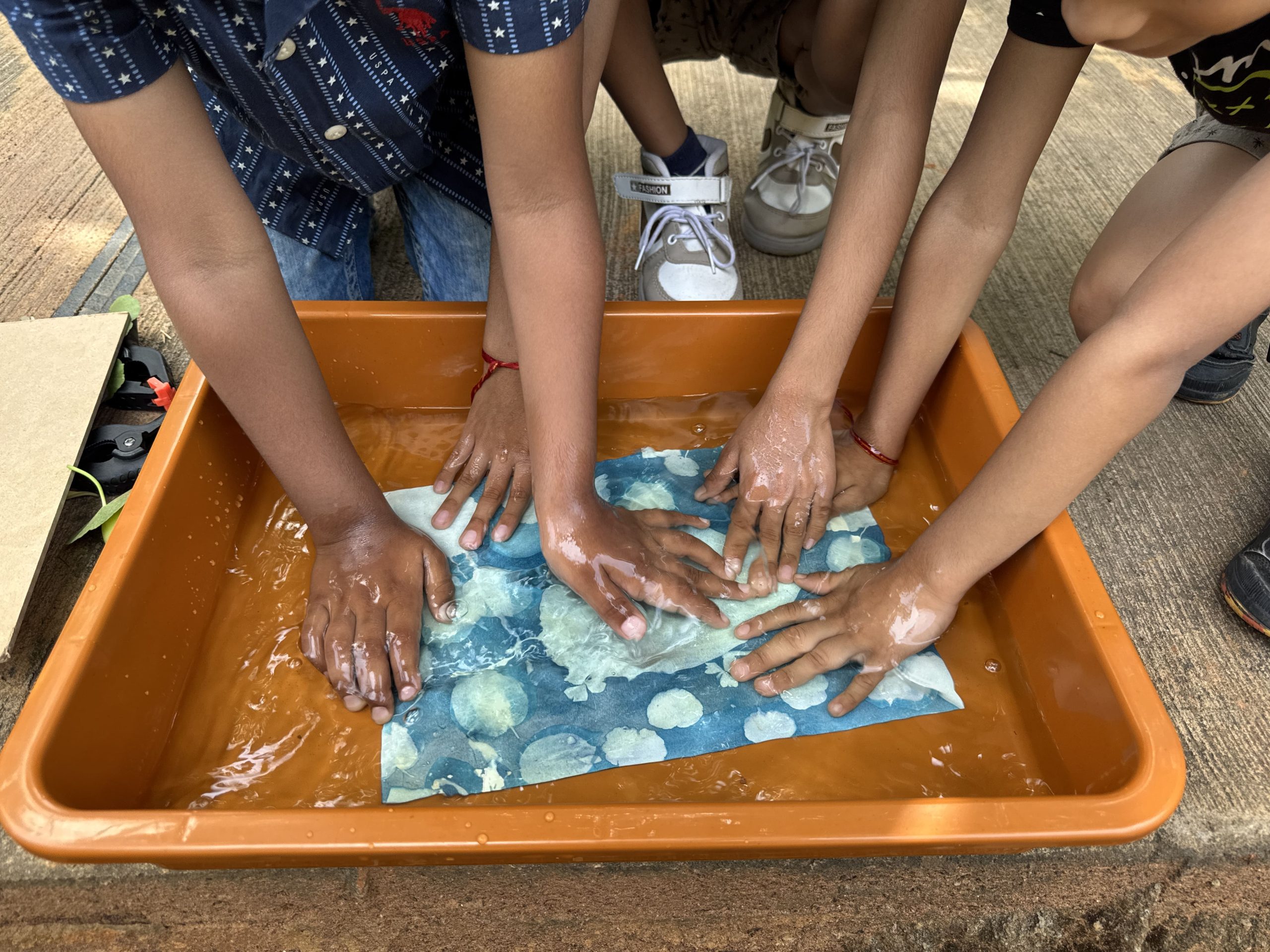
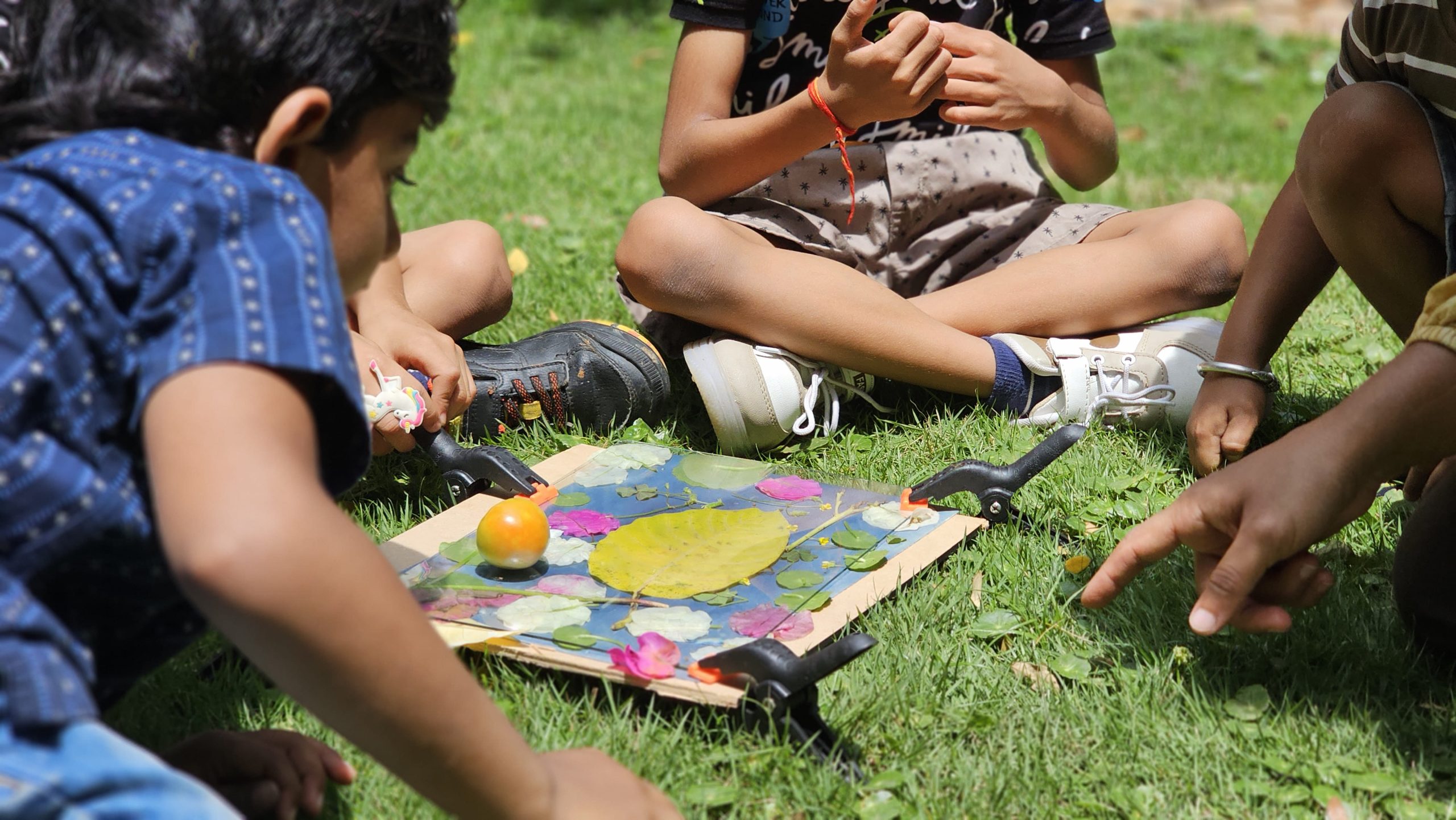
Last week I ran a small workshop with a group of children. I gave them paper coated with cyanotype chemistry and told them to go and find something from the garden, the terrace and the ground around them.
They came back with rocks, giant leaves, flowers, feathers, grass with soil still clinging to roots. And one of them brought a piece of plastic. He held it up and said: plastic abbu madatte. Plastic hurts. Abbu in Kannada means wound, the word you use when something causes pain. The kids had just finished another workshop on waste segregation, I assumed this lot were informed.
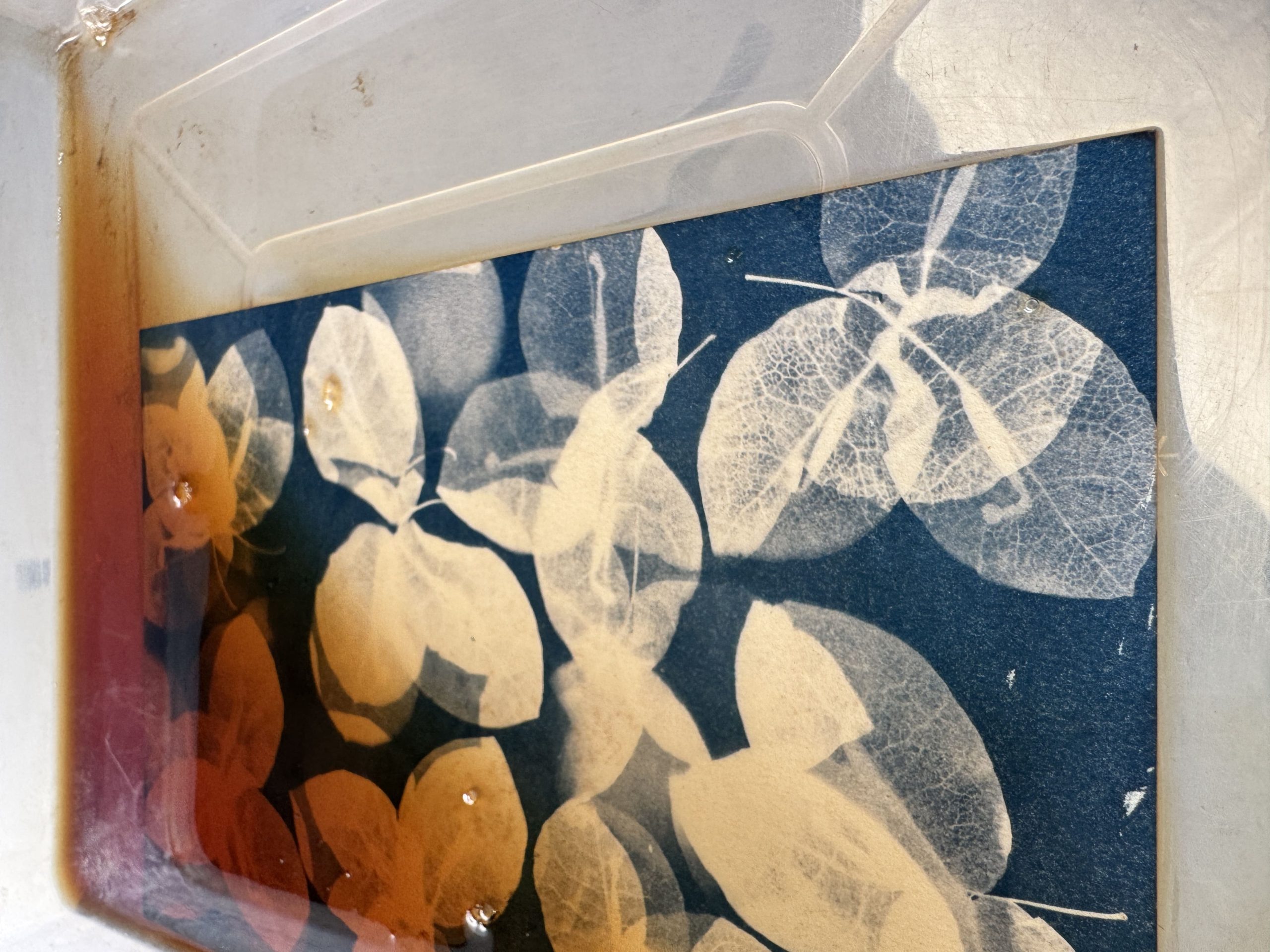
We pressed everything onto the paper and carried it up to a sunny spot. Some minutes passed and we washed the prints when the blue appeared and the white shapes emerged from what had looked like nearly nothing. There were oohs and gasps and wows.
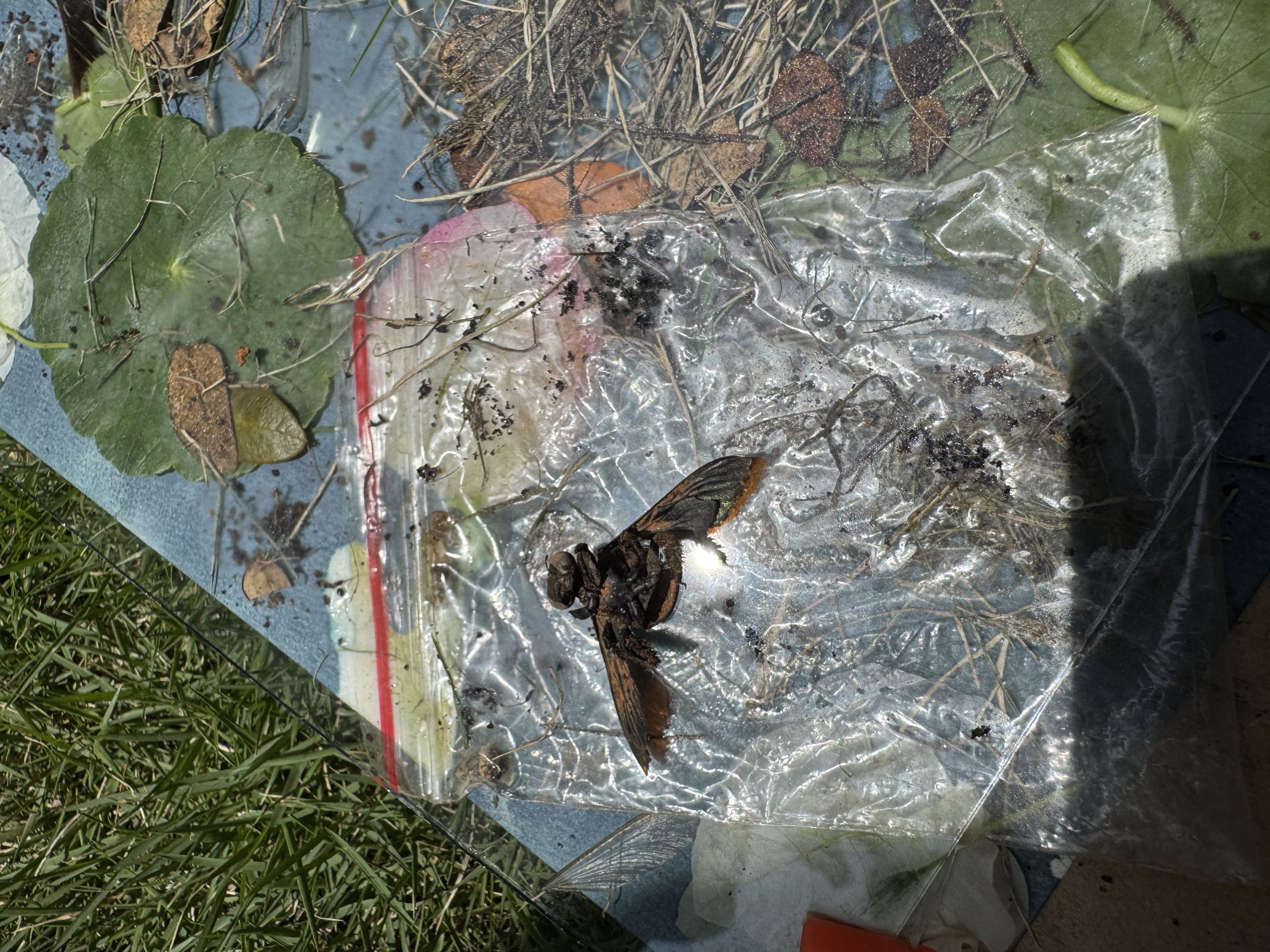
What happened in that moment was chemistry, light, and contact. But what the child named was real: something transformed. Something that wasn’t there before now was. The leaf left its shape. The feather left its trace. The bug one of the kids had carefully placed on the paper left a fuzzy print with its wing spread. He kept pointing at it, gasping, looking back up at me to make sure I was seeing it, too, that was his bug, that it was really there. This, to me, speaks to how material carries memory in a way that a statistic doesn’t.
It also puts a question hovering around me: what does the act of making teach that other modes of learning can’t?
Saurav, who was the resident here before me, asked something similar in a blog post I read before I arrived: whether learning can emerge from the act of making. His answer, drawn from a seven-year pea plant experiment and a two-week river walk, was: only if we’re willing to sit with questions. (hyperlink to his blog)
More than a focus on the transmission of information about circularity or sustainability or the life of materials, I want it to be an encounter with those things that are physical, immediate, and surprising. Where the learning and reflection happens in the hands before it takes form in the head.